Dark clothes start fading too soon, towels feel rough instead of soft, and gym wear still smells sweaty right after a wash.
It can feel incredibly frustrating when your clothes never seem fully clean, no matter how much detergent you use. In many homes, the real problem is not the washing machine or the detergent itself.
If this sounds familiar then the main issue is hard water.
Hard water contains high levels of minerals like calcium and magnesium. These minerals interfere with how detergent works, making laundry much harder to clean properly. That is why choosing the right laundry detergent for hard water can completely change the way your clothes look, smell, and feel after every wash.
Does hard water affect laundry detergent?

Yes, hard water does affect laundry detergent - more than most people realize.
If you have ever noticed that your detergent barely lathers or leaves residue behind, hard water is likely the reason. The minerals in hard water attach themselves to the cleaning ingredients in detergent before the detergent can fully clean your clothes.
Instead of lifting dirt, sweat, and oils from fabric, the detergent gets “used up” fighting minerals in the water. This leads to several common laundry problems like:
-
Dull looking and faded clothes
-
Reduced lather during the wash cycle
-
White fabrics turning gray over time
-
Stiff and scratchy towels
-
Fabrics with soap residue
-
Lingering odors in activewear
Many people assume they simply need more detergent, but adding extra soap usually makes the issue worse since excess detergent can build up inside fabrics.
Finding the best laundry soap for hard water is important because formulas designed for mineral-heavy water clean clothes more effectively without leaving behind residue or buildup.
Why synthetic fabrics and hard water are a bad match

If you’ve ever pulled your gym clothes out of the wash smelling perfectly fresh, only to notice the “sweaty” odor return as soon as you start moving, blame the hard water. This is especially common with synthetic fabrics such as polyester, nylon, and spandex, which are the same materials used in sports bras, leggings, dry-fit tees, and even workout shorts.
Washing these clothes in hard water leaves stubborn “perma-stink” many runners, gym-goers, and busy moms know too well. This is exactly why choosing the right laundry detergent for hard water matters. A standard detergent may work fine in soft water areas, but when it comes to hard water, your clothes need a formula that’s specifically designed to fight mineral buildup while still breaking down bacteria, sweat, and oils effectively.
What to look for in the best laundry soap for hard water

Not all detergents are built to handle mineral-heavy water. The best laundry soap for hard water usually contains ingredients that soften water while cleaning clothes at the same time.
Here are a few things worth looking for:
-
Water-softening builders: During the wash cycle, ingredients like sodium citrate or zeolites neutralize hard water minerals.
-
Enzyme-rich formulas: Protease and lipase enzymes target body oils, sweat, food stains, and odor-causing bacteria trapped inside synthetic fabrics.
-
Liquid detergents over powders: In many homes, liquid formulas work better as a laundry detergent for hard water because they dissolve quickly and leave less residue behind.
Why cold water washing actually helps
It’s a common misconception that hot water is the only way to deal with stubborn odors and dirty laundry. But modern detergents have changed the game. Pairing a high-quality laundry detergent for hard water with a cold wash cycle works even better, because:
-
Hot water can lock certain stains deeper into fabric
-
Synthetic fibers lose elasticity faster in high heat
-
Cold water helps activewear keep its shape longer
-
Colors stay brighter and fabrics fade less
For heavily sweaty items like gym tees, soccer uniforms, or sports bras, an enzyme pre-treatment before washing can make a noticeable difference.
Comparison: hard water vs. soft water laundry
|
Feature |
Soft Water Results |
Hard Water (Standard Detergent) |
Hard Water (Specialized Detergent) |
|
Lather Production |
High / Abundant |
Very Low / Flat |
Medium to High |
|
Detergent Amount |
Minimal needed |
Requires 2x or 3x more |
Standard dose |
|
Fabric Feel |
Soft and fluffy |
Stiff and scratchy |
Soft and clean |
|
Odour Removal |
Easy |
Poor (especially in synthetics) |
Excellent (with enzymes) |
|
Longevity of Clothes |
Long-lasting |
Shortened due to fiber wear |
Long-lasting |
How to optimize your wash cycle for hard water
You can achieve great results by making small tweaks to your laundry routine. Start by:
-
Not overloading the machine: Clothes need room to move so the water can flow through the fibers and rinse away the mineral-heavy suds.
-
Using an acidic rinse: Hard water is naturally alkaline. Adding a half-cup of white distilled vinegar to the fabric softener compartment acts as a natural neutralizer and helps strip away the "detergent curd".
-
Boosting your detergent: If your water is extremely hard, using a dedicated best laundry soap for hard water is non-negotiable. It ensures that the active ingredients are actually cleaning your clothes rather than just fighting the water.
-
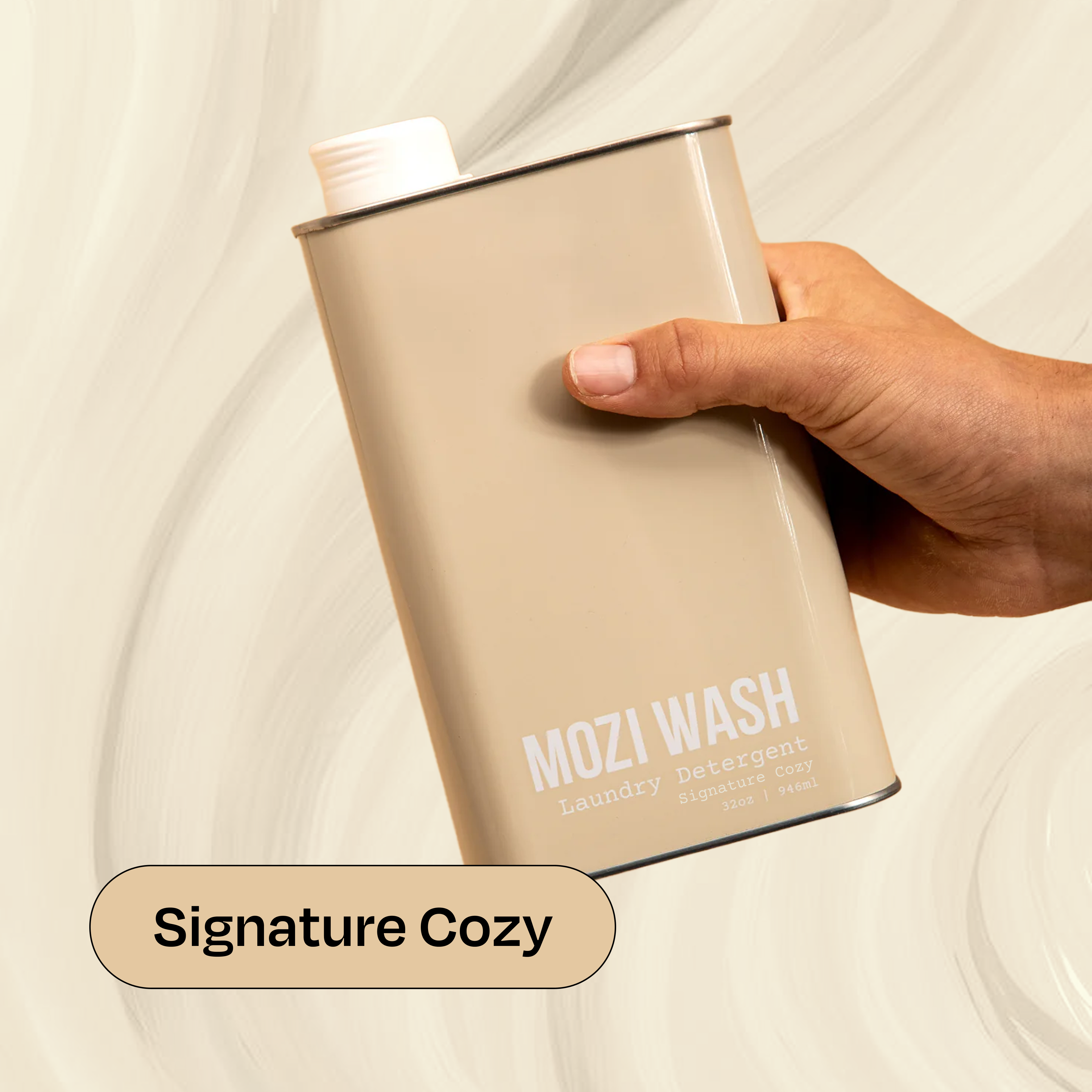
Targeting the odor: For the active moms juggling yoga pants and school sports kits, the biggest hurdle is how hard water interacts with synthetic fabrics. Because these materials are designed to repel water, they often hold onto body oils. Integrating a solution like Mozi Wash is a smart move; its formula is specifically curated to bridge the gap between difficult water and stubborn synthetic fibers.
Why is Mozi Wash a game changer?
Finding the best laundry detergent for hard water can completely change how your clothes look, feel, and smell after every wash.
Since hard water minerals reduce lather and make it harder for detergent to clean properly, choosing a formula that works well in mineral-heavy water is essential. This is where Mozi Wash stands out. Its concentrated liquid formulas are designed to rinse clean, work effectively even in hard water conditions, and leave behind long-lasting freshness without heavy residue buildup.
Whether you are dealing with stiff towels, faded dark clothes, or workout gear that never smells fully clean, Mozi Wash offers fragrance options and cleaning performance that make laundry feel noticeably fresher and softer.
Some of the popular options from Mozi Wash include:
-
Central Coast for fresh coastal citrus scent
-
Cozy Cashmere for warm soft linen fragrance
-
Alpine Woods for woodsy sandalwood outdoor vibe
-
Sugar Dew for fruity bright tropical freshness
-
Golden Hour for rich luxurious evening scent
-
Free & Clear for fragrance-free sensitive skin option
The key to a clean, fresh-smelling laundry when you have hard water is getting the perfect laundry detergent for hard water, and nailing the specific washing steps. Once you get these things right, you’ll not only have brighter, softer clothes but also a much more pleasant laundry experience, every time.
FAQs about laundry detergent for hard water
1. Will my laundry feel stiff after washing in hard water?
Yes. It’s because calcium and magnesium in hard water create a residue that sticks to fabric fibers.
2. Does hard water affect laundry detergent bubbles?
Yes, hard water minerals suppress the foaming agents in soap. If you notice a lack of suds, it’s a sign your laundry detergent for hard water is being "used up" by the minerals rather than cleaning your clothes.
3. How to get rid of the "gym smell" out of my yoga pants if I have hard water?
Use an enzyme-based cleaner like Mozi Wash, which is specifically designed to penetrate synthetic fibers and keeps your athletic gear smelling fresh.
4. Can I use more detergent to compensate for hard water?
It’s not ideal since using extra detergent can lead to more buildup and may eventually damage your washing machine’s sensors. Instead, use a formula specifically designed for high mineral content.
5. Is liquid detergent better than powder for hard water?
Generally, yes. Liquid detergents are less likely to form insoluble clumps when they react with calcium, which makes them a more effective laundry detergent for hard water.