Mildew smell is one of those laundry problems that keeps coming back.
You wash the towels again. Add more detergent. Maybe even switch to a highly scented laundry detergent, hoping the stronger fragrance will solve it. But a day later, the odor returns the moment the fabric gets damp again.
That’s because mildew smell usually isn’t sitting on the surface of the fabric. It’s trapped inside the fibers along with moisture, detergent residue, body oils, and bacterial buildup.
If you’ve been searching for how to get mildew smell out of clothes, the solution is not just a stronger fragrance. The real fix comes from removing buildup properly and helping fabrics rinse cleaner over time.
What causes a musty smell in laundry?

The most common reason behind a musty smell in laundry is trapped moisture combined with residue buildup.
This usually happens when:
-
Wet clothes sit too long in the washer
-
Towels dry too slowly
-
Too much detergent is used repeatedly
-
Washing machines contain internal buildup
-
Thick fabrics are overloaded during washing
Over time, fabrics stop rinsing cleanly. Residue settles deep into the fibers, making it easier for mildew odor to return after every wash.
This is especially common in:
-
Towels
-
Gym clothes
-
Bedding
-
Heavy cotton fabrics
-
Sweatshirts and hoodies
Why do clothes smell after washing, even when they look clean

One of the biggest reasons clothes smell after washing is detergent residue. Most people assume a stronger fragrance means cleaner laundry, but heavy detergent buildup can actually trap moisture and odor inside the fibers.
When fabrics are not rinsed properly, they slowly begin to:
-
Smell damp after drying
-
Feel heavier or rougher
-
Lose absorbency
-
Develop stale odor faster
This is why simply adding more detergent rarely fixes the mildew smell long-term. Even a laundry soap that smells good can create buildup if too much product is used repeatedly.
How to get mildew smell out of clothes properly

Removing mildew smell is less about covering odor and more about resetting the fabric.
1. Start with a vinegar pre-soak
A diluted white vinegar soak helps loosen:
-
Detergent residue
-
Mineral buildup
-
Trapped odor particles
This step is especially useful for towels and thicker fabrics.
2. Wash with the correct detergent amount
Too much detergent can leave residue behind. Too little may not clean deeply enough.
Balanced detergent use is one of the most important parts of learning how to remove musty smells from clothes effectively.
3. Use the right washing temperature
Temperature matters more than people realize.
For heavily used whites, towels, and bedding:
-
Warm water usually removes buildup better
-
Extremely hot water may damage fibers over time
-
Cold water works best for lighter everyday loads
The right balance helps fabrics rinse cleaner without unnecessary wear.
4. Dry fabrics completely before storing
Even slightly damp towels or clothing can restart mildew odor quickly. Proper airflow during drying is just as important as the wash cycle itself.
Why do towels hold onto mildew smell longer
Towels absorb more than just water.
Over time, towel fibers trap:
-
Body oils
-
Soap residue
-
Humidity
-
Excess detergent
-
Dead skin cells
As the buildup increases, towels lose absorbency and begin holding odor more easily. This is why towels often smell clean while folded, but develop odor immediately after use.
The connection between gray whites and mildew odor
Dull whites and mildew smell usually come from the same issue: residue buildup.
Over time, detergent particles and trapped oils slowly coat white fabrics, causing them to:
-
Looks gray or dingy
-
Feel rougher
-
Lose brightness
-
Hold onto odor more easily
This is why formulations like Mozi Wash Free & Clear focus on cleaner-rinsing performance instead of relying heavily on optical brighteners. Cleaner fabric fibers naturally look brighter over time.
Why a stronger fragrance does not always mean fresher laundry
A lot of people searching for the best-smelling detergent assume a stronger fragrance automatically means cleaner laundry. But heavily fragranced formulas can sometimes leave more residue behind, especially when overused.
This is why some clothes smell strongly scented at first but still develop mildew odor later.
True freshness usually depends on:
-
Cleaner rinsing
-
Reduced buildup
-
Proper drying
-
Balanced detergent use
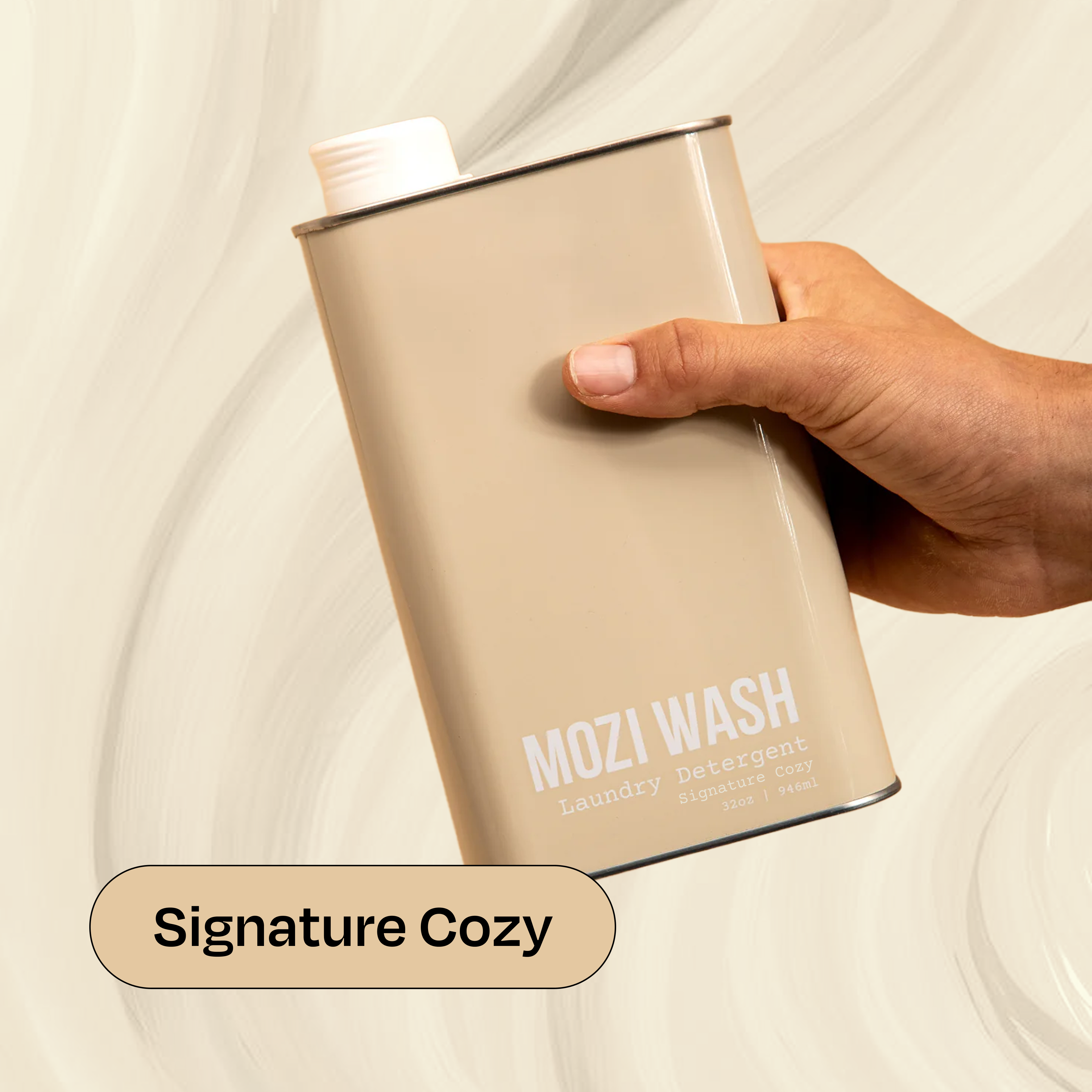
How Mozi Wash balances freshness with cleaner-rinsing formulas
Many people want the best-smelling laundry detergent without making towels or clothes feel coated afterward. Mozi Wash approaches this differently by combining fragrance-forward formulations with cleaner-rinsing ingredients designed to reduce buildup over time.
Some key features include:
-
Uses coconut-derived cleansers that help fabrics rinse cleaner
-
Helps reduce residue buildup that can trap mildew odor over time
-
Avoids phosphates, sulfates, parabens, and phthalates
-
Designed to support repeated washing without making fabrics feel stiff
-
Works well for towels, bedding, and thicker fabrics that hold odor more easily
-
Offers fragrance-forward formulas for people looking for the best-smelling laundry detergent
-
Includes balanced scent profiles for those who prefer a laundry detergent that smells like perfume
-
Provides a softer cologne laundry detergent experience without overpowering fabrics
-
Helps towels and sheets stay fresher longer without heavy coating buildup
-
Supports cleaner and more refined laundry detergent scents for everyday laundry care
Why laundry detergent scents affect how “clean” clothes feel
Scent changes how people experience laundry. Some fragrances feel crisp and airy. Others feel warm, musky, powdery, or perfume-inspired. This is why laundry detergent scents have become a major factor in people's detergent choices today.
For many households, freshness is now part of the overall fabric experience, not just stain removal.
FAQs on how to get mildew smell out of clothes and towels
1. Can the best-smelling laundry detergent remove mildew smell permanently?
The best-smelling laundry detergent can enhance freshness, but proper rinsing and complete drying are essential to prevent mildew odor from returning.
2. Why do towels smell musty again after getting wet?
Towel fibers can reactivate trapped moisture, detergent residue, and bacteria once they become damp again.
3. Can cologne scented laundry detergent work well for bedding?
Yes. A cologne scented laundry detergent is often preferred for sheets and comforters because fragrance tends to stay longer on heavier fabrics.
4. Can mildew smell spread from one item of clothing to another?
Yes. Washing musty fabrics together with fresh laundry can transfer odor particles during the wash cycle, especially in overloaded machines.
5. Can fragrance beads make mildew smell worse over time?
In some cases, fragrance boosters can add another layer of buildup if fabrics are not rinsed thoroughly, which may trap odor inside the fibers.
6. Why do synthetic clothes hold onto odor longer than cotton?
Synthetic fibers trap sweat oils more tightly than natural fibers, making odor harder to remove completely during regular washing cycles.
7. Can a laundry detergent that smells like perfume work for sensitive fabrics?
Yes, but lighter and cleaner-rinsing formulas are usually better for delicate fabrics than overly heavy fragrance blends.