Oil stains are deceptive. At first, they may look minor: a small cooking splash, a drop of salad dressing, a faint mark from skincare or body oil. Then the fabric dries, and suddenly the stain looks darker, more noticeable, and much harder to remove.
That’s because oil behaves differently from most stains. It doesn’t sit on the surface of fabric like dirt or dust. Instead, it settles deep into fibers, especially after heat exposure.
The good news is that learning how to remove oil stains from clothes is less about aggressive scrubbing and more about timing, technique, and using the right cleaning approach.
Why are oil stains harder to remove than other stains

Unlike dirt or sweat, oil does not naturally dissolve in water.
Oil repels water and clings tightly to fabric fibers, especially on absorbent materials like cotton, linen, silk, and knitwear. Once heat is introduced, through warm water or a dryer, the stain bonds more deeply with the fabric.
This is why many people only notice an oil stain after the garment has already been washed and dried.
Oil stains are especially common on:
-
T-shirts and cotton clothing
-
Linen garments
-
Silk and satin fabrics
-
Knitwear and sweaters
-
Light-colored clothes
How to get oil stains out of clothes

Oil stains are easier to remove when treated quickly, but the right technique matters just as much as timing. Instead of scrubbing aggressively, the goal is to lift the grease gradually without pushing it deeper into the fabric.
Here are the steps that can be followed to get oil stains out of clothes:
1. Blot the excess oil first
Use a paper towel, tissue, or clean cloth to gently blot the stained area. Avoid rubbing the fabric. Rubbing spreads the oil and forces it deeper into the fibers.
2. Use an absorbent powder
Cover the stain with an absorbent material such as:
-
Salt
-
Baking soda
-
Cornstarch
Let it sit for several minutes to help pull surface grease away from the fabric. This step is especially useful for fresh cooking oil or butter stains.
3. Apply dish soap to the stain
Add a small amount of dish soap directly onto the stained area. Dish soap helps break down surface grease because it contains surfactants that separate oil from fabric fibers.
Gently spread it over the stain using your fingers; avoid scrubbing aggressively.
4. Rinse with cool water
Use cold or cool water instead of hot water.
Hot water may cause the stain to settle deeper into the fabric, especially during the early stages of treatment.
5. Wash using an enzyme-based detergent
After rinsing, wash the garment using a delicate laundry detergent or hand-wash laundry detergent containing enzymes. Enzymes such as lipase help break down remaining grease particles more effectively than regular detergents alone.
6. Air dry before checking the stain
Do not place the garment directly into the dryer. Allow it to air dry naturally first so you can check whether the stain has fully disappeared. If any dark patch remains, repeat the treatment before exposing the fabric to heat.
These steps can also help when removing oil stains from clothes after drying. Even if the stain has already gone through heat, follow these steps and remove the stains.
Which household oils stain clothes the most
Not all oil stains behave the same way. Some penetrate fabric more deeply and leave stronger residue behind.
The most stubborn types usually include:
-
Cooking oils like olive oil or vegetable oil
-
Butter and ghee
-
Body oils and skincare products
-
Hair serums and scalp oils
-
Greasy sauces and salad dressings
These stains spread quickly because oils move easily through fabric fibers, especially on lightweight materials.
Why dish soap helps break down grease
Dish soap works because it contains surfactants that break apart grease molecules.
It acts as an initial grease stain remover by loosening surface oil before the garment goes into a full wash cycle.
However, dish soap alone is not always enough for fabric-deep stains, especially once the stain has dried. That’s where enzyme-based detergents become useful.
How enzyme detergents help remove oil stains

Oil stains often need more than surface cleaning. Enzymes help break stains down at a molecular level, which is why they’re commonly used in modern stain-focused detergents.
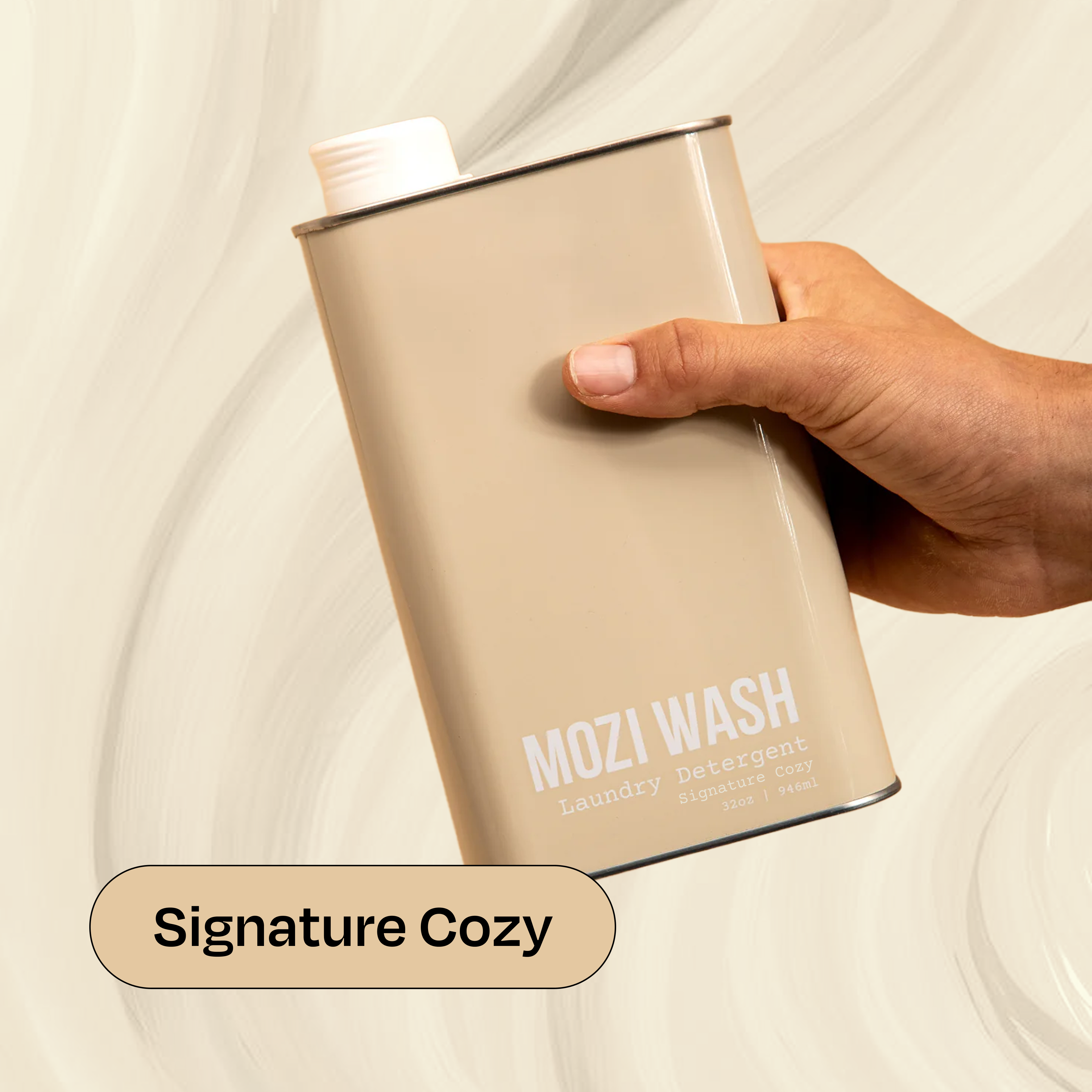
Brands like Mozi Wash use formulations in their laundry detergent that include plant-based enzymes such as:
-
Lipase, which targets grease and oils
-
Protease, which works on protein stains
-
Amylase, which helps break down starch-based residue
Mozi Wash also uses coconut-derived cleansers and avoids harsh additives like sulfates, parabens, phosphates, and phthalates.
This kind of balanced formulation can work well as an everyday oil stain remover for clothes, especially when paired with proper stain-treatment methods and gentle washing practices.
Why delicate fabrics need a gentler stain-removal approach
Oil and grease stains become more complicated on delicate fabrics because aggressive cleaning can damage the garment before the stain disappears.
Silk, wool, cashmere, and fine knitwear do not respond well to:
-
Harsh scrubbing
-
High heat
-
Strong chemical cleaners
-
Rough agitation
A delicate laundry detergent for these kinds of fabrics works better because it breaks down stains gradually while helping preserve texture and softness.
Common mistakes that make oil stains harder to remove
Sometimes the stain itself isn’t the biggest problem; the cleaning method is.
A few small mistakes can make oil stains much more difficult to treat later:
-
Leaving the stain untreated for too long
-
Using excessive detergent, which may leave residue behind
-
Applying multiple cleaning products at once
-
Ignoring faint stain outlines after washing
-
Washing delicate fabrics too aggressively
-
Skipping fabric-care instructions on garment labels
Oil stains usually respond better to a controlled, step-by-step approach rather than trying to remove them all at once.
FAQs on how to remove oil stains from clothes (even after drying)
1. Can delicate laundry detergent be used on workout clothes with body oil buildup?
Yes. A delicate laundry detergent can help remove sweat and body oil buildup from activewear without damaging stretch fabrics or leaving heavy residue behind.
2. Can delicate laundry detergent help reduce stiffness after stain treatment?
Yes. A delicate laundry detergent usually rinses more cleanly, which may help fabrics feel softer after repeated washing.
3. Can steam make old oil stains harder to remove?
Yes. Steam and high heat can push leftover grease deeper into fabric fibers, especially if the stain was not fully removed before ironing or steaming.
4. Can hand-washing laundry detergent help clean oil stains from silk pillowcases?
Yes. A hand-wash laundry detergent is suitable for delicate fabrics like silk because it cleans gently without excessive agitation or harsh residue.
5. Can delicate laundry detergent be used for oil-based skincare or makeup stains?
Yes. A delicate laundry detergent with gentle enzymes can help break down residue from products like foundation, sunscreen, or facial oils.