You wash your workout clothes. They smell clean coming out of the machine. Then, five minutes into your next workout, the odor comes back again.
That happens because activewear behaves very differently from cotton laundry.
Most gym clothes are made from synthetic performance fabrics like polyester, nylon, or elastane. These materials are designed to trap less moisture on the surface so sweat evaporates faster during workouts. But there’s a tradeoff.
Synthetic fibers also trap body oils, bacteria, and detergent residue much more tightly than cotton. That’s why gym clothes still smell after washing, even when they look perfectly clean.
The problem is usually not “too much sweat.” It’s how synthetic fabrics hold onto buildup inside the fibers over time.
Why do synthetic workout clothes trap odor differently

Cotton absorbs moisture deeply into the fabric. Synthetic activewear works differently. It pushes moisture outward to dry faster, but oils and odor-causing buildup can stay attached to the fibers much more easily.
Over time, workout clothes collect:
-
Sweat oils
-
Skin bacteria
-
Detergent residue
-
Fabric softener buildup
-
Heat-set odor particles
Once this buildup settles into synthetic fibers, regular washing may stop removing odor completely. That’s why washing synthetic fabrics in gym clothes requires a different approach than normal laundry.
Why do gym clothes still smell after washing

Most odor problems are caused by buildup, not dirt alone. Here are the biggest reasons workout clothes hold smell even after laundry:
Excess detergent
Using too much detergent may leave residue trapped inside synthetic fibers.
Fabric softener buildup
Fabric softener coats activewear fibers, which can trap sweat oils and bacteria more easily.
Heat during washing or drying
High heat can lock odor deeper into synthetic fabrics over time.
Letting sweaty clothes sit too long
Damp workout clothes can allow odor-causing buildup to develop quickly.
How to wash gym clothes properly

Learning how to wash gym clothes is less about stronger washing and more about preventing buildup from settling into the fabric.
Wash activewear in cold water
Cold water is usually safer for synthetic workout fabrics because high temperatures may:
-
Damage elasticity
-
Lock odor deeper into fibers
-
Wear down performance fabric faster
Cold water also helps preserve stretch and shape in activewear.
Turn gym clothes inside out
Most sweat, bacteria, and body oils build up on the inside surface of workout clothing. Turning garments inside out allows detergent to reach the areas where buildup is strongest.
Skip fabric softener completely
This is one of the biggest changes people notice. Fabric softener may temporarily make workout clothes feel smoother, but it can also coat synthetic fibers and trap odor over time.
For activewear, cleaner-rinsing laundry routines usually work better than heavy conditioning products.
Don’t overload the washer
Gym clothes need enough movement and water circulation for the detergent to rinse out properly.
Overloading the machine may:
-
Trap detergent residue
-
Reduce odor removal
-
Prevent proper rinsing
Synthetic fabrics usually clean better in smaller loads.
The best detergent for activewear works differently
The best detergent for activewear is not necessarily the strongest-smelling detergent. For workout clothes, cleaner-rinsing performance matters much more.
Good activewear detergents are usually designed to:
-
Break down sweat oils
-
Remove residue buildup
-
Rinse cleanly from synthetic fibers
-
Work effectively in cold water
-
Avoid heavy coating ingredients
This is important because a strong fragrance alone often masks odor temporarily instead of removing the buildup causing it.
How to get sweat smell out of workout clothes
If activewear already holds stubborn odor, a few adjustments usually help more than repeatedly washing.
Rinse sweaty clothes sooner
Letting damp gym clothes sit in a bag or laundry basket for hours allows bacteria to build up quickly.
Use less detergent
More detergent does not mean cleaner workout clothes. Excess product often makes the buildup worse.
Add an extra rinse cycle
Synthetic fabrics sometimes trap detergent more easily than cotton.
Air dry when possible
High dryer heat may set odor deeper into performance fabrics over time.
These steps often help when figuring out how to get sweat smell out of workout clothes without damaging the fabric.
Why drying matters more than people realize
A lot of activewear odor problems start after washing, not before. If workout clothes stay damp too long after laundry:
-
Odor-causing buildup may develop
-
Odor may return faster
-
Fabric may develop a sour smell
Whenever possible:
-
Hang activewear immediately after washing
-
Allow airflow between garments
-
Avoid leaving damp clothes inside the washer
Lower heat drying usually helps synthetic fabrics last longer as well.
How Mozi Wash helps activewear rinse cleaner
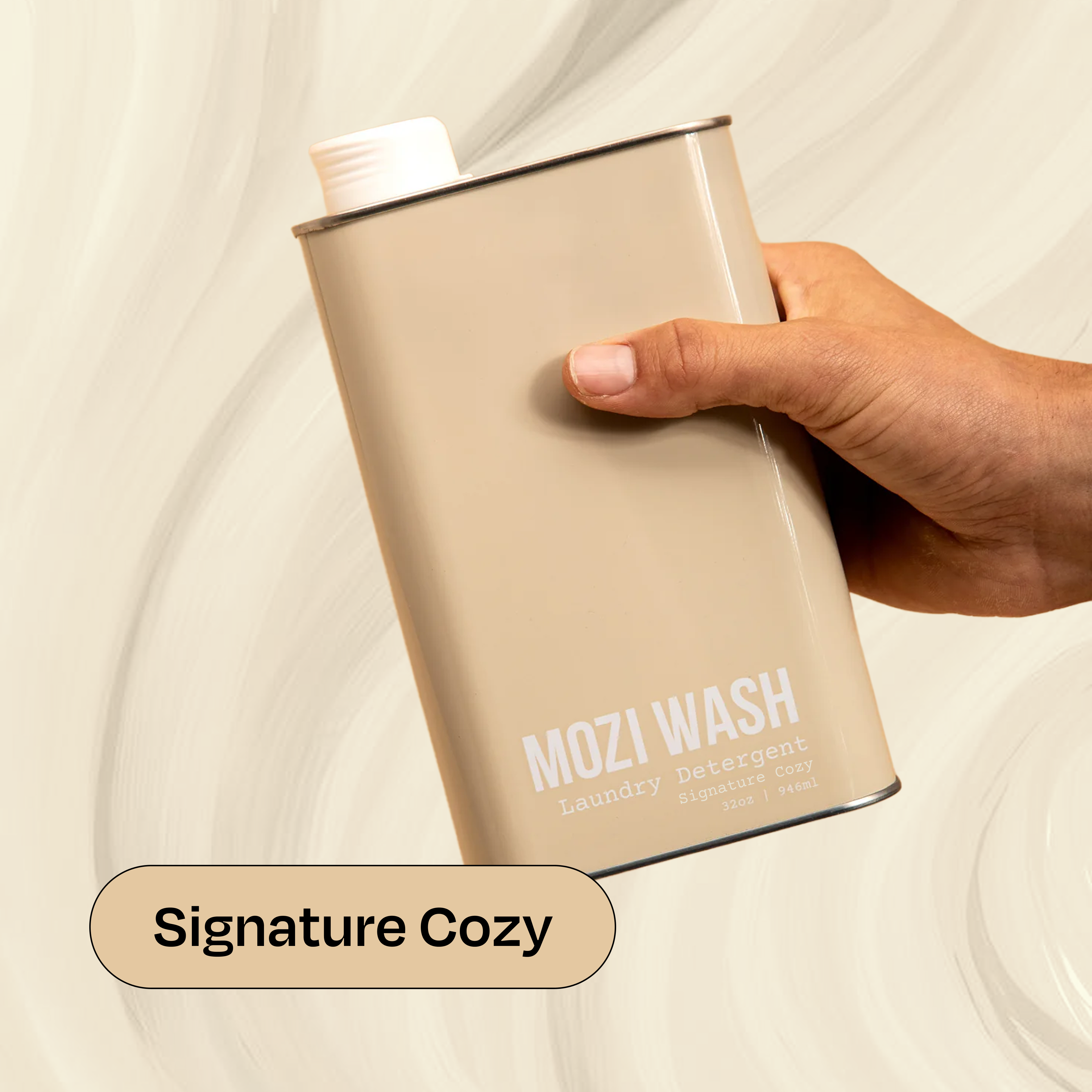
Mozi Wash is designed for fabrics that tend to trap sweat, detergent residue, and odor over time, especially synthetic activewear and frequently washed workout clothing.
-
Coconut-derived cleansers
-
Plant-based enzymes
-
Lower-residue surfactant systems
These ingredients help break down sweat oils and everyday buildup without heavily coating the fabric afterward.
This approach is especially useful for:
-
Workout clothing
-
Synthetic fabrics
-
Towels
-
Frequently washed laundry
Instead of relying on overpowering fragrance to mask odor, the Mozi Wash formulas focus more on removing buildup that causes smells to return quickly after washing.
Gym clothes usually smell cleaner when less buildup stays behind
A lot of people try solving activewear odor with:
-
Stronger fragrance
-
Hotter water
-
More detergent
-
Rewashing clothes repeatedly
But synthetic fabrics usually respond better to:
-
Cleaner rinsing
-
Lower heat
-
Less buildup
-
Better drying habits
Because in most cases, the smell returning after workouts is not coming from “dirty clothes.” It’s coming from residue and bacteria trapped deep inside the fibers over time.
FAQs on how to wash gym clothes so they stop smelling
1. How to wash gym clothes without damaging stretch fabrics?
Use cold water, avoid high-heat drying, and skip fabric softener to help maintain elasticity in activewear fabrics.
2. Why do gym clothes still smell after washing, even with strong detergent?
Synthetic fabrics can trap sweat oils, bacteria, and detergent residue deep inside the fibers, making odor harder to remove completely.
3. What is the best detergent for activewear and synthetic workout clothes?
The best detergent for activewear is usually one that rinses cleanly, works well in cold water, and helps break down sweat buildup without heavily coating fabrics.
4. Why should fabric softener be avoided on workout clothes?
Fabric softener may coat performance fibers and reduce breathability while trapping odor and sweat oils more easily over time.
5. Why do synthetic fabrics hold odor longer than cotton?
Synthetic fibers hold onto body oils and bacteria more tightly, especially when detergent residue and heat buildup accumulate over time.
6. Can washing synthetic fabrics in gym clothes too often damage them?
Repeated high-heat washing and drying may gradually weaken elasticity and performance features in synthetic activewear.