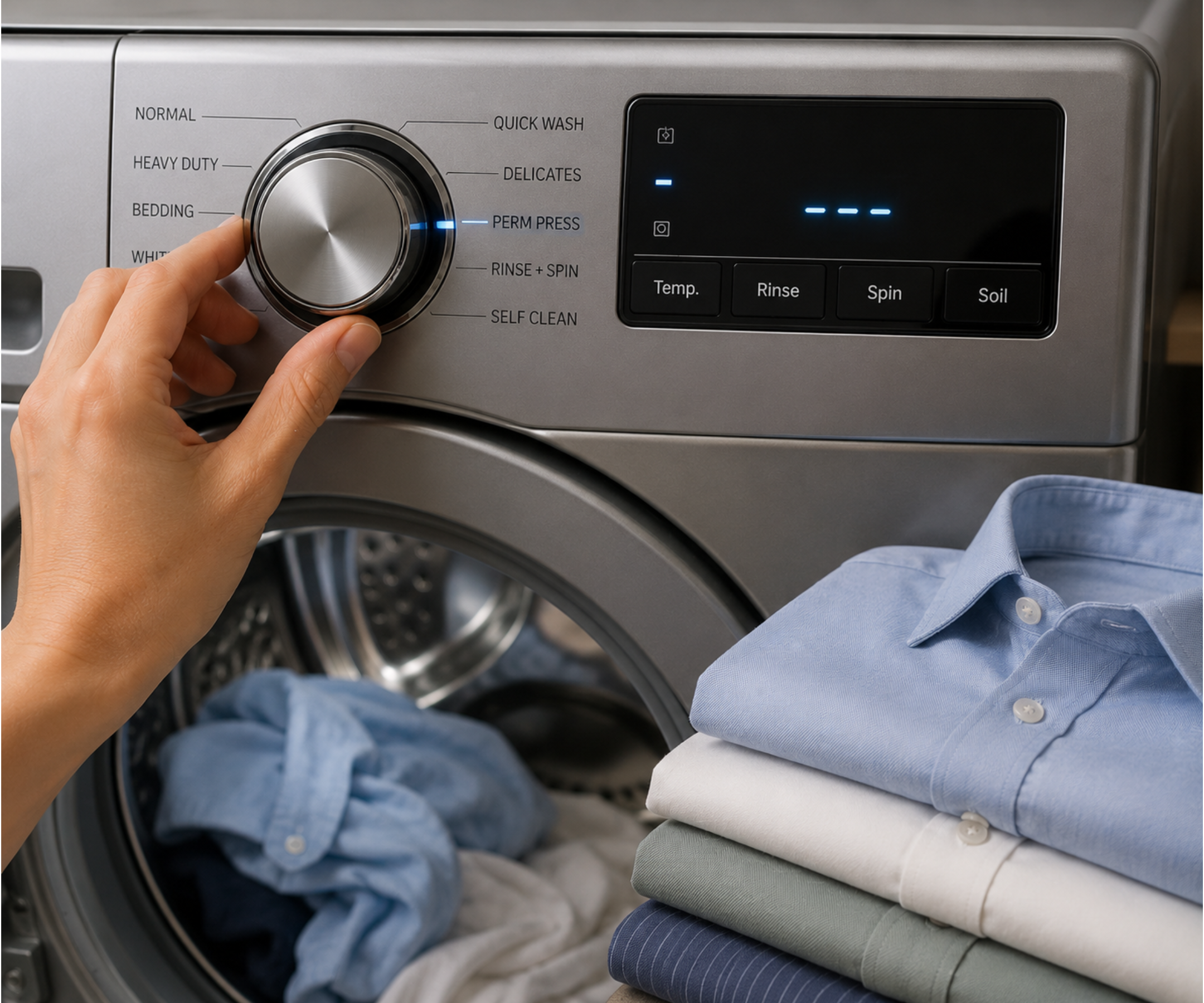
You’ve probably seen it on your washing machine or dryer: Perm Press.
It sits there next to Normal, Delicate, maybe Quick Wash. If you’ve ever hesitated before selecting it, you’re not alone. Most of the time, it’s ignored. Not because it’s unimportant, because it’s not very obvious.
And once you understand what the perm press cycle actually does, it becomes one of the most useful settings on your machine - especially if you care about how your clothes look after washing.
What is perm press cycle?

At its simplest, perm press (short for “permanent press”) is a cycle designed to reduce wrinkles. That’s really the core idea.
It’s not about deep cleaning like a heavy-duty cycle. And it’s not as gentle as a delicate wash cycle. It sits somewhere in between - carefully balancing cleaning with fabric care.
Originally, the term “permanent press” came from fabrics that were chemically treated to resist wrinkles. Over time, washing machines and dryers adopted the setting to help maintain that finish.
Today, the cycle is more broadly used for everyday clothes that you want to come out looking smooth - not crumpled.
You might not always see it labeled “Perm Press”

One thing that makes this setting confusing is the name itself. This is because not every machine actually calls it “perm press.”
Depending on the brand, you might see it labeled differently but the function is usually the same.
Some common alternatives include:
-
Permanent Press
-
Anti-Wrinkle
-
Crease guard
-
Wrinkle Control
-
Wrinkle Guard
-
Casual
-
Easy Care
All of these are essentially designed for everyday fabrics that don’t need heavy washing. But still benefit from a cycle that reduces wrinkling.
So if you don’t see “perm press” on your machine, there’s a good chance it’s there - just under a different name.
What is perm press wash cycle in a washing machine?

On a washing machine, the perm press wash cycle works a little differently from a regular wash. It’s not just one setting; rather, it is a combination of small adjustments.
Typically, it includes:
-
Warm water for washing
-
A cold rinse
-
Slower spin speed
-
Gentler agitation
Warm water helps lift dirt. But the slower spin prevents clothes from twisting tightly. Because twisting tightly is what usually causes wrinkles.
So instead of coming out tightly wrung and creased, your clothes stay more relaxed.
What is perm press on a dryer?

This is where people notice the biggest difference. The perm press setting on a dryer is designed to reduce wrinkles while drying.
Instead of blasting high heat from start to finish, it works in stages:
-
Medium heat for drying
-
A gradual reduction in temperature
-
A cool-down period at the end
That last part matters the most. As the heat drops, fabrics have a chance to relax instead of “setting” into wrinkles.
How does the permanent press reduce wrinkles?
Wrinkles don’t just appear randomly. They’re usually the result of:
-
Heat
-
Pressure
-
How fabric cools
When clothes are hot and then suddenly stop moving, they tend to hold whatever shape they’re in. That’s what creates those sharp creases.
The permanent press cycle changes that pattern. Instead of ending abruptly, it lets fabrics cool gradually while still moving. That’s what helps reduce wrinkles in the first place.
What is the difference between perm press and normal wash?

This is where things get clearer.
A normal cycle is built for efficiency:
-
Faster washing
-
Higher spin speed
-
Stronger agitation
It’s designed to clean thoroughly, even if that means more stress on the fabric.
Perm press cycle, on the other hand, takes a slightly slower, more controlled approach:
-
Lower heat
-
Slower spin
-
Reduced agitation
-
Added cool-down time
The result? Less wrinkling. Less wear over time. And clothes that are easier to wear straight out of the dryer. It’s not better or worse - just meant for a different purpose.
When should you use the permanent press cycle?
This is where most people get confused. Because the answer isn’t “always.”
The perm press cycle works best for:
-
Everyday clothes (t-shirts, tops, shirts)
-
Synthetic fabrics like polyester
-
Blended fabrics
-
Clothes that easily get wrinkled
It’s especially useful for items you don’t want to iron later. That’s really the point. If you want clothes to come out looking ready to wear, this setting helps.
When should you avoid it?
The perm press cycle isn’t meant for everything. You’ll want to skip it for:
-
Thick fabrics like towels or hoodies
-
Heavily soiled clothes
-
Delicate fabrics (silk, lace, etc.)
Heavy loads need more power than this cycle provides. Delicates need gentler handling. So while the perm press cycle is versatile, it’s not universal.
Is the perm press cycle better than delicate?
Not exactly. They both do different things. Delicate is softer overall - lower temperatures, minimal agitation. On the other hand, the perm press cycle still cleans actively. It just avoids unnecessary stress.
So if something is labeled “delicate,” that’s the safer choice. But for everyday clothes? The perm press cycle often works better.
A small detail people often miss
Even with the right cycle, timing still matters. Leaving clothes sitting in the washer or dryer for too long can undo everything. They settle. They crease. And suddenly, the wrinkle control doesn’t feel very effective anymore.
So another important part of using a perm press cycle effectively is to take clothes out when the cycle ends.
Your detergent matters
The cycle does its part. But how your clothes feel after washing and drying doesn’t come down to the cycle alone. Sometimes it’s in the smaller things.
-
How does the fabric feel when it comes out?
-
How does it settle as it dries?
-
How does it smell when you wear it later?
This is where your detergent quietly shapes the experience.
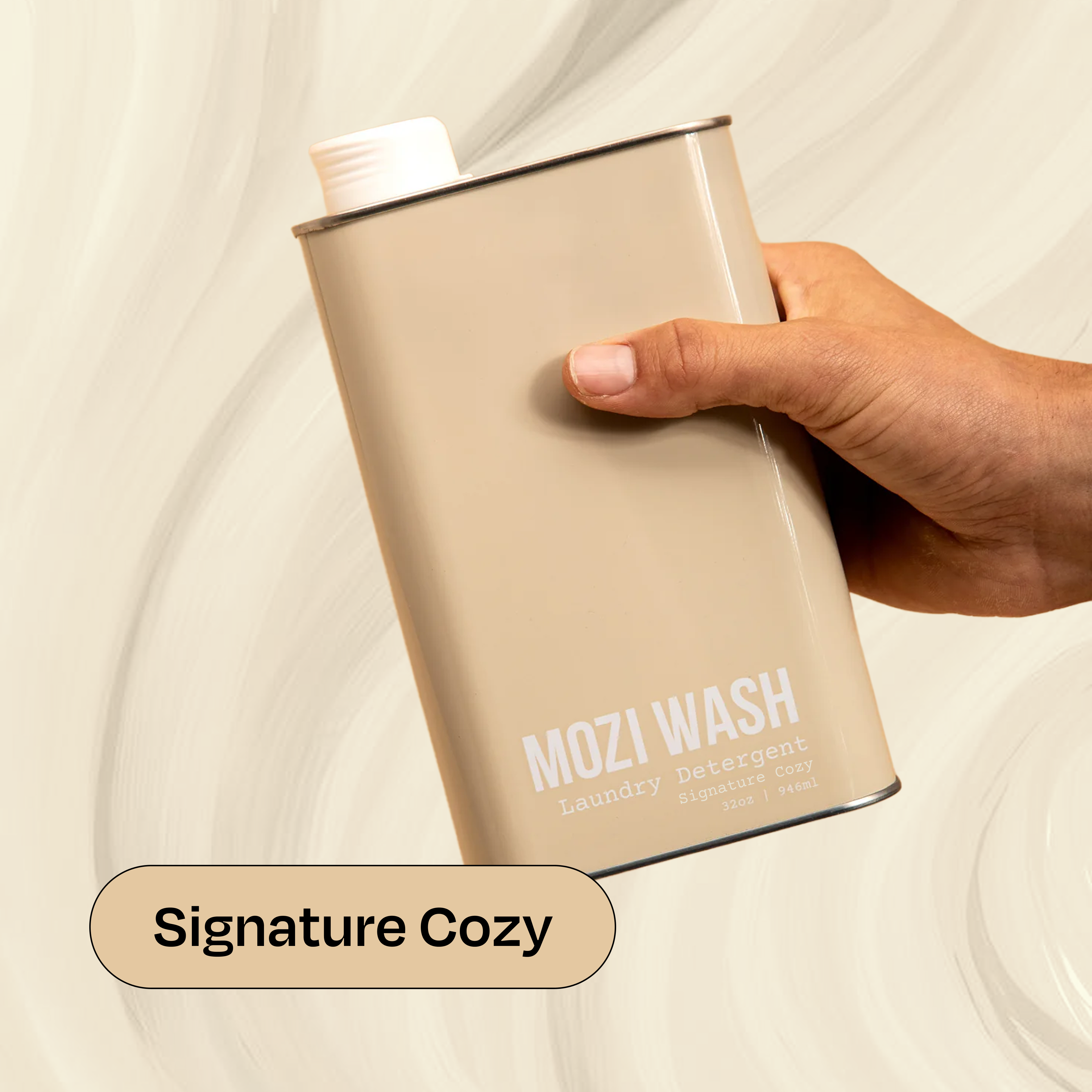
Mozi Wash keeps things balanced. It cleans without feeling harsh. So fabrics don’t lose their natural texture over time. Since it’s thoughtfully formulated, your clothes don’t carry that heavy, overwashed feel that sometimes leads to stiffness or wrinkling.
There’s also the fragrance. Not something sharp or overwhelming. But something that stays subtle, clean, and close to the fabric for long.
So when your clothes come out of a perm press cycle, they don’t just look better - they feel right and smell elegant. That’s usually the difference you notice the most.
A better way to think about the perm press cycle
The perm press cycle is one of those features that’s easy to overlook. Instead of seeing it as just another setting, think of it as a way to reduce effort later.
-
Less ironing
-
Less reshaping
-
Less fixing after the fact
Because the goal isn’t just clean clothes. It’s clothes that look and smell good when you wear them.
FAQs about Perm Press Cycle
Can I use the permanent press cycle for all clothes?
No. It’s best for everyday fabrics and synthetics, but not ideal for heavy loads or delicate items.
Does the permanent press cycle shrink clothes?
Generally, no. At least not as much as a normal cycle. Because it uses lower heat and slower movement. It actually helps reduce the chances of shrinking.
What is perm press on a dryer?
It’s a drying setting that uses medium heat followed by a cool-down period to prevent wrinkles from setting into fabric.
Does the perm press cycle reduce the need for ironing?
Yes. That’s one of its main benefits. Clothes come out with fewer wrinkles.
What is perm press wash cycle?
It’s a washing cycle that uses warm water, gentle agitation, and slower spinning to clean clothes while minimizing wrinkles.
What is the difference between perm press and normal wash?
Normal wash focuses on strong cleaning, while perm press cycle reduces wrinkles using lower heat, slower spin, and gentler movement.
Are the delicate cycle and perm press cycle the same?
No. The delicate cycle is gentler overall. The perm press cycle is designed specifically to reduce wrinkles.