Studies suggest that around 60–70% of women and nearly 50–60% of men experience some level of sensitive skin.
For some, it shows up as dryness or itchiness after wearing freshly washed clothes. For others, it can be redness around waistbands, irritation from bedsheets, or discomfort that gets worse after repeated exposure to certain fabrics.
And surprisingly, the issue is not always the fabric itself. In many cases, it’s what stays on the fabric after washing.
Laundry detergent residue can remain trapped inside fibers long after clothes come out of the machine. Towels, bedding, kids' clothes, and activewear tend to hold onto residue even more because they absorb more water, sweat, oils, and detergent during washing.
That’s why finding the best laundry detergent for sensitive skin is often less about stronger cleaning and more about choosing formulas that clean effectively without leaving unnecessary buildup behind.
Why do some detergents trigger skin irritation more easily?

Not every detergent affects skin the same way. Some formulas contain ingredients that may stay on fabrics longer after washing, especially if:
-
Too much detergent is used
-
Fabrics rinse poorly
-
The laundry load is overloaded
-
Thick fabrics trap residue more easily
This becomes more noticeable with:
-
Bedsheets
-
Towels
-
Children’s clothing
-
Underwear
-
Synthetic fabrics
For people with sensitive skin, repeated exposure to buildup can matter more than a single wash cycle.
Ingredients that many sensitive skin households try to avoid

People looking for a detergent for skin sensitivity concerns often start by checking ingredient labels more carefully.
Some ingredients that should be commonly avoided include:
Parabens
Used as preservatives in some personal care and cleaning products. This is one reason many households now prefer a paraben-free laundry detergent for everyday fabrics.
SLS (sodium lauryl sulfate)
A stronger surfactant is commonly used for deep cleaning and heavy foaming. While effective for breaking down grease, it may feel harsher on fabrics washed repeatedly.
Optical brighteners
These ingredients are designed to make fabrics appear visually brighter by reflecting light. The problem is that they can remain on clothing fibers after washing instead of rinsing away fully.
Synthetic fragrance compounds
Heavily fragranced detergents may contain stabilizers and scent boosters designed to keep fragrance on fabrics for longer periods. For some people, fragrance buildup becomes more noticeable over time through repeated skin contact.
Fragrance-free vs perfume detergent sensitive skin: what matters more?
When comparing fragrance-free vs perfume detergent sensitive skin concerns, the biggest difference is usually how long fragrance compounds stay on the fabric after washing.
Here’s a table with their features:
|
Feature |
Fragrance-Free Detergent |
Perfumed Detergent |
|
Added scent |
None or minimal |
Noticeable fragrance |
|
Best suited for |
Highly sensitive or eczema-prone skin |
People who prefer scented laundry |
|
Fragrance longevity |
Very low |
Lasts longer after washing |
|
Commonly used for |
kids’ clothes, towels, bedding |
Everyday clothing and linens |
|
Potential downside |
Laundry may smell more neutral |
Fragrance may feel overpowering for some users |
For many households, choosing the right detergent comes down to finding a balance between fabric comfort, freshness, and overall skin sensitivity.
What to look for in the best laundry detergent for sensitive skin
Sensitive skin detergents usually work best when they focus on reducing buildup while still cleaning effectively.
Ingredients many households now look for include:
-
Plant-derived surfactants
-
Cleaner-rinsing formulas
-
Lower residue buildup
-
Balanced fragrance systems
-
Paraben-free formulations
-
Gentle enzyme systems
-
No optical brighteners
The goal is not weak cleaning. It’s effective cleaning that leaves less behind on the fabric afterward.
Why plant-based detergents are becoming more popular for sensitive skin

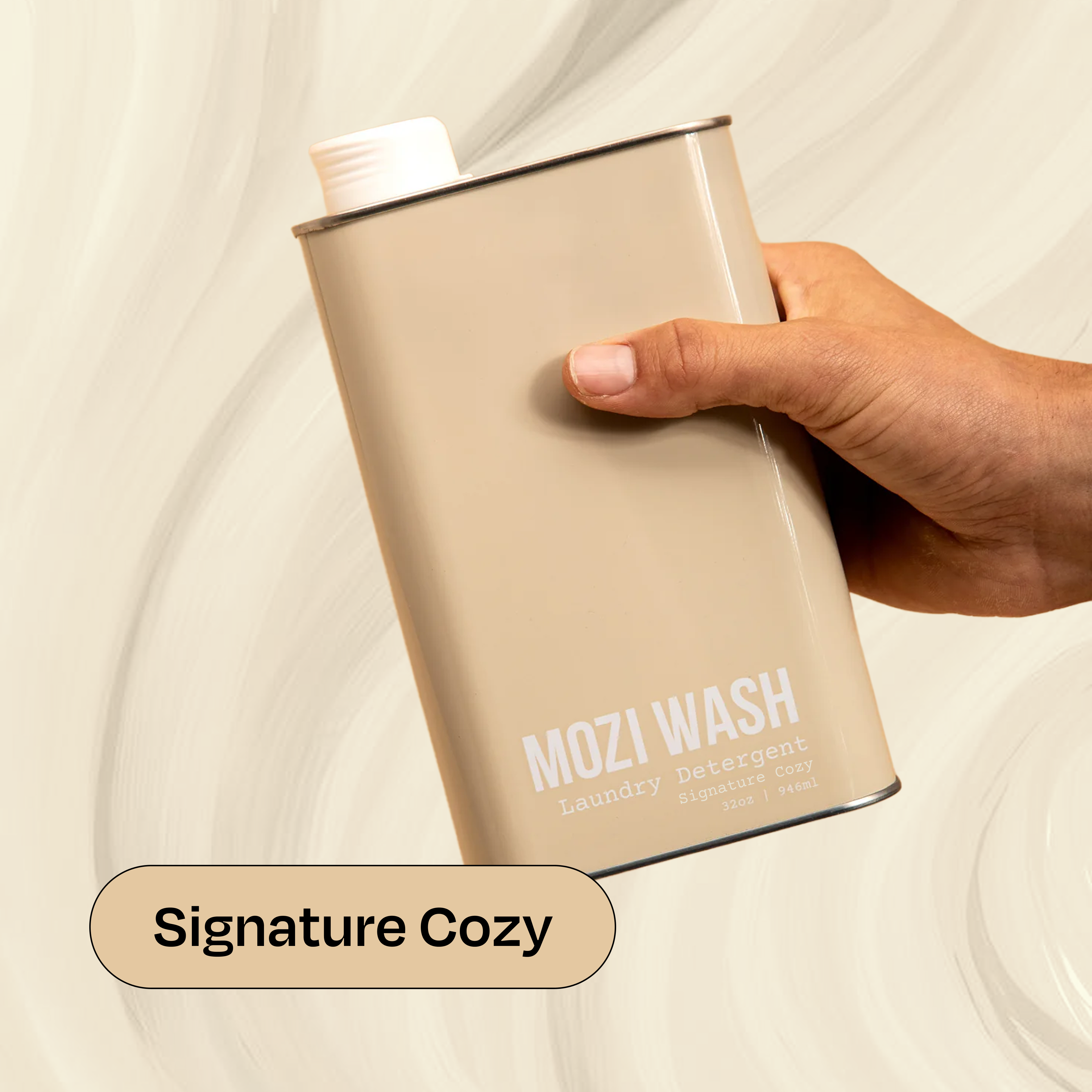
Older detergents were often seen as less effective on oils, odor, and buildup. Modern plant-based laundry detergent formulas, like Mozi Wash, work differently.
It combines:
-
Coconut-derived cleansers
-
Plant-based surfactants
-
Enzyme systems
-
Lower-residue formulations
These ingredients are used to clean fabrics more thoroughly while helping them rinse more cleanly afterward. This is one reason plant-based formulas are becoming more common in households dealing with:
-
Sensitive skin
-
Children’s laundry
-
Bedding care
-
Frequent washing routines
Comparison: Traditional detergents vs cleaner-rinsing formulas
Not all detergents clean fabrics in the same way. Some formulas focus heavily on strong fragrance, thick foam, and long-lasting scent. Others are designed to rinse more cleanly from fabrics while reducing buildup over time.
The difference becomes more noticeable after repeated washing, especially on towels, bedding, activewear, and clothes that stay close to the skin for long hours.
Here’s how traditional heavy detergents and cleaner-rinsing formulas usually compare:
|
Feature |
Traditional Heavy Formulas |
Cleaner-Rinsing Formulas |
|
Fragrance level |
Usually stronger |
More balanced |
|
Foam production |
Higher suds |
Moderate suds |
|
Residue buildup over time |
More likely |
Usually lower |
|
Fabric feel after repeated washes |
Can feel coated or heavy |
Often feels lighter |
|
Optical brighteners |
Commonly used |
Often minimized or avoided |
|
Cold water performance |
May not dissolve fully |
Typically dissolves more evenly |
|
Best suited for |
Strong scent preference |
Sensitive skin and repeated fabric use |
|
Towel absorbency over time |
May reduce absorbency |
Helps maintain the fabric's feel better |
Why Mozi Wash works well for sensitive skin households
Mozi Wash takes a more fabric-focused approach to laundry care instead of relying heavily on strong fragrance or coating ingredients to create a “clean” feel.
Its formulas are designed to help remove everyday buildup while rinsing more cleanly from fabrics that stay close to the skin for long hours, like:
-
Bedsheets
-
Towels
-
Kids’ clothes
-
Activewear
-
Undergarments
The detergents combine coconut-derived cleansers with plant-based enzymes that help break down oils, sweat, and residue during washing without leaving fabrics feeling overly heavy afterward.
This makes the formulas especially useful for households searching for:
-
The best laundry detergent for sensitive skin
-
A paraben-free laundry detergent
-
A gentler detergent for eczema concerns
-
A reliable plant-based laundry detergent for daily laundry loads
Instead of creating a heavily fragranced finish, the focus is more on cleaner-rinsing performance, balanced freshness, and fabrics that feel lighter and more breathable after repeated washing.
FAQs on the best laundry detergent for sensitive skin
1. What makes the best laundry detergent for sensitive skin different from regular detergents?
Sensitive skin detergents are usually designed to reduce residue buildup on fabrics while still cleaning oils, sweat, and everyday dirt effectively.
2. Can a paraben-free laundry detergent still remove strong laundry odors?
Yes. A paraben-free laundry detergent can still remove odor effectively when it uses surfactants and enzymes that target the oils and residue causing the smell.
3. How does plant-based laundry detergent clean clothes without harsh ingredients?
Modern plant-based laundry detergent formulas use plant-derived surfactants and enzymes to lift dirt, grease, and buildup from fabrics during washing.
4. Why do some detergents make sensitive skin feel worse over time?
Repeated exposure to detergent residue, fragrance compounds, and coating buildup on fabrics can gradually increase irritation for some people.
5. Why do synthetic fabrics react differently to detergents for eczema concerns?
Synthetic fabrics tend to hold oils, sweat, and detergent residue more tightly than cotton, which can make irritation feel more noticeable over time.
6. Why do workout clothes sometimes cause more skin irritation after washing?
Activewear fabrics can trap sweat, oils, and detergent residue more easily, especially when heavily fragranced or residue-heavy detergents are used repeatedly.