It took no time for Emma to realize that she could name every ingredient in her morning smoothie, but had absolutely no idea what was in the detergent. That realization changed everything.
We spend so much time vetting our skincare and food, yet we often ignore the chemistry of high end laundry products that interact with our skin, constantly.
Why label knowledge matters
Whether you are browsing an online shop or walking the laundry aisle, being hit with a wall of complex chemical names can feel overwhelming. Most of us simply grab a bottle that promises a "fresh scent" or "tough stain removal" and toss it into the cart.
But, the lack of transparency in the industry is startling. Many brands hide complex chemical cocktails under the vague term "fragrance." So, if you want to transition to a high end laundry detergent, the first step isn't looking at the price tag — it’s understanding the chemical composition inside the bottle.
This is similar to our skincare routine where we actively vet our moisturizer for parabens and shampoo for sulfates. It’s time to apply that same logic to laundry, as the clothes stay in direct contact with our skin every minute of every day.
When you invest in high-end laundry products, you aren't just paying for a pretty package; you are protecting your health and your wardrobe.
Traditional detergents often leave a microscopic chemical film on fabric fibers. When you move or sweat, your pores can absorb this residue, leading to unexplained skin irritation or respiratory issues.
The harsh, abrasive agents found in standard soaps can strip the dyes from your favorite designer pieces and ruin the elasticity of luxury loungewear. By choosing a high end laundry detergent, you ensure your investment pieces stay soft, vibrant, and safe for your skin for years to come.
Take a quick look at some of the safer choices and what ingredients you need to be careful with:
|
Generally Safer Choices |
Be Careful With |
|---|---|
|
Plant-based surfactants |
Synthetic Surfactants |
|
Enzyme-free formulas |
Optical brighteners |
|
pH-balanced cleansers |
Harsh sulfates |
|
Minimal ingredient lists |
Artificial dyes |
Demystifying common detergent ingredients
To make better choices, we need to strip away the marketing jargon. Here is what is actually happening inside those colorful pods and bottles, and why your skin might be protesting.
Phthalates
These are the scent extenders, which are essentially plasticizers. In the world of high end laundry detergent brands, quality is often measured by how long a scent lingers. Traditional brands use phthalates to make those synthetic scents stick to your clothes for weeks.
The downside? Phthalates are known endocrine disruptors. They mimic hormones in the body, which can lead to a host of long-term health issues. When your clothes smell like a "Spring Meadow" long after they’ve left the dryer, it’s usually phthalates doing the heavy lifting.
Sodium Lauryl Sulfate (SLS) and SLES
SLS is a surfactant — the stuff that creates suds. We’ve been conditioned to think that more bubbles mean a deeper clean, but that’s a myth.
SLS is highly effective at removing grease, but it’s also a notorious skin irritant. It strips the natural oils from your skin and can weaken fabric fibers over time. Truly high end laundry products use gentler, plant-derived surfactants that clean without the aggressive chemical "bite."
Optical brighteners
Ever wonder how your white shirts look "whiter than white"? It’s an optical illusion. Optical brighteners are chemicals that remain on the fabric after rinsing. They absorb UV light and re-emit it as blue light, tricking the eye into seeing brightness.
These chemicals don’t actually clean your clothes; they just coat them. Because they are designed to stay on the fabric, they are in constant contact with your skin, which is a leading cause of contact dermatitis for those with sensitive skin.
Synthetic musks
These are the heavy-duty fragrances that give detergents their signature smell. Unlike natural essential oils, synthetic musks are persistent in the environment and can build up in human tissue.
They often cause "detergent migraines" or respiratory irritation when you pull a fresh load out of the dryer.
What to avoid and why: Let’s break it down
Think of your clothes as a second skin. If you wouldn't rub a specific chemical on your face, why would you want it woven into your favorite sweater? You should generally avoid detergents that use:
-
Optical brighteners
-
Dyes
-
Unspecified fragrances
These additives do nothing for the cleanliness of the garment; they are purely aesthetic.
Cheap fillers are another red flag. Many laundry detergent high end options are concentrated, meaning you use less. Mass-market brands often use water or salt as fillers to make the bottle look bigger, which is both an environmental waste and a sign of a lower-quality formula.
If you’re seeing "Aqua" as the primary ingredient followed by a list of sulfates, you’re paying for a lot of water and a little bit of harsh soap.
The transparent answer: Mozi Wash
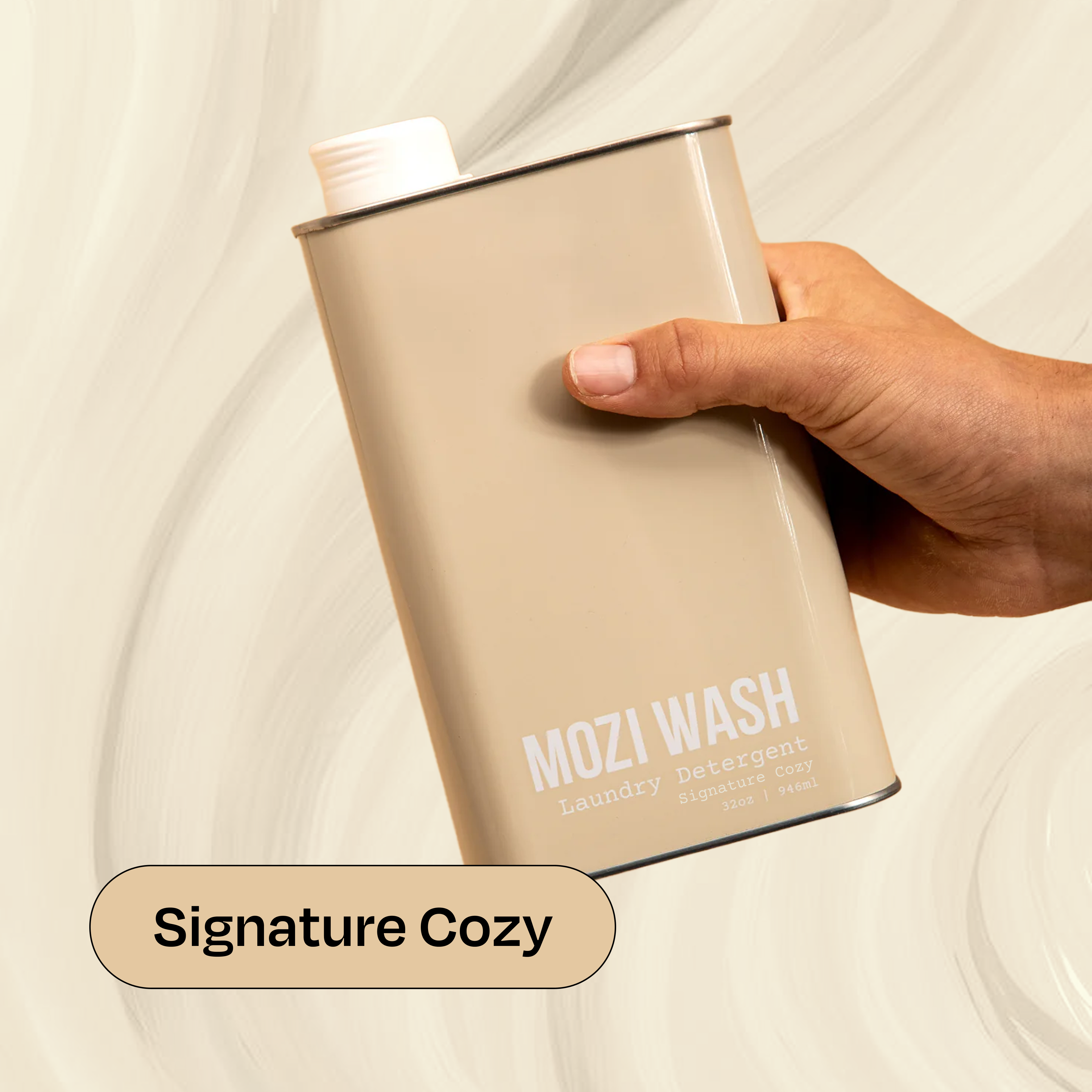
This is where the crossover between clean beauty and home care becomes vital. Mozi Wash has emerged as the clear alternative for those tired of the "chemical soup" found in standard supermarket aisles.
Unlike brands that hide behind trade secrets, Mozi Wash provides a clear look at their ingredients. Their philosophy aligns more with luxury skincare than traditional cleaning supplies.
By browsing the Mozi Wash collection, you see a commitment to removing the "nasties" like parabens and phthalates. Their approach to high end laundry detergent brands focuses on sophisticated, safe scents and biodegradable formulas. It’s about the efficacy without the compromise.
When you use a product that values transparency, you aren't just cleaning your clothes; you’re protecting your home environment.
The modern consumer is savvy. You check the labels on your serums and your shampoos. It only makes sense that this scrutiny extends to your laundry room.
FAQs about Laundry Detergent Ingredients
1. Is it worth investing in high end laundry products for everyday clothes?
Absolutely. Just like your expensive clothes, your everyday cotton tees and gym wear too deserve the right washing detergent. Using high end laundry products ensures that everyday clothes don't harbor chemical residues that can irritate your skin or degrade the fabric prematurely.
2. How can I tell if a laundry detergent is truly high end or just expensive?
Price doesn't always equal quality. A true high end laundry detergent will have a transparent ingredient list. Look for the absence of SLS, phthalates, and optical brighteners. If the brand label highlights where their ingredients come from and avoids "filler" chemicals, you’d know that it’s a premium product.
3. Do clean detergents work well on tough stains?
Yes, but they work differently. Instead of using harsh chemicals to "bleach" the appearance of a stain, high-quality detergents use bio-based enzymes that break down proteins and fats at a molecular level, actually removing the dirt rather than just hiding it.
4. Can I use laundry detergent high end brands in HE (High Efficiency) machines?
Most laundry detergent high end formulas are highly concentrated and low-sudsing by nature, making them perfect for HE machines. Because they don't use unnecessary foaming agents, they rinse away cleaner than standard detergents.
5. What is the biggest "red flag" on a detergent label?
The word "Fragrance" (or Parfum) without any clarification. This is a "catch-all" term that can hide hundreds of chemicals, including allergens and neurotoxins, that companies aren't legally required to disclose.
6. Are these products safe for septic systems?
Generally, yes. Because premium clean detergents avoid harsh toxins and prioritize biodegradable ingredients, they are much kinder to septic systems and the local water supply than traditional chemical-heavy brands.