Most people never think twice about their laundry detergent ingredients. You pour, wash, dry, repeat. After all, you want clean clothes.
The scent smells “clean,” the stains disappear, and the bottle promises freshness. What’s there to think?
But the truth is, many detergents rely on ingredients most people don’t fully understand — and probably wouldn’t choose if they did. Seriously, only 1.8% people “always” read labels on household products involving chemicals. That includes detergents.
Knowing what you are using matters because detergent doesn’t just disappear after the wash. It stays on your clothes, sheets, towels, and everything else that sits against your skin every single day.
This isn’t about fear. It’s about clarity on what you trust.
Once you understand what’s inside your detergent — and what those ingredients actually do — it becomes easier to choose products that clean well without feeling excessive.
That’s the idea behind a non-toxic detergent: performance without unnecessary compromise. Plant-based enzymes instead of harsh solvents. No hormone disruptors. Zero skin irritants.
What’s actually inside laundry detergent?

Most detergents contain a mix of ingredients designed to do different jobs:
-
cleaning stains (surfactants)
-
softening water (builders and chelating agents)
-
boosting fragrance (fragrance compounds)
-
preserving shelf life (parabens)
-
brightening fabric appearance (optical brighteners)
None of that sounds alarming on its own. The issue is usually how aggressively these jobs are done — and what gets left behind in the process.
Some formulas prioritize intensity: stronger scents, brighter colors, heavier foaming. Others focus on balance, keeping the cleaning effective while reducing unnecessary additives.
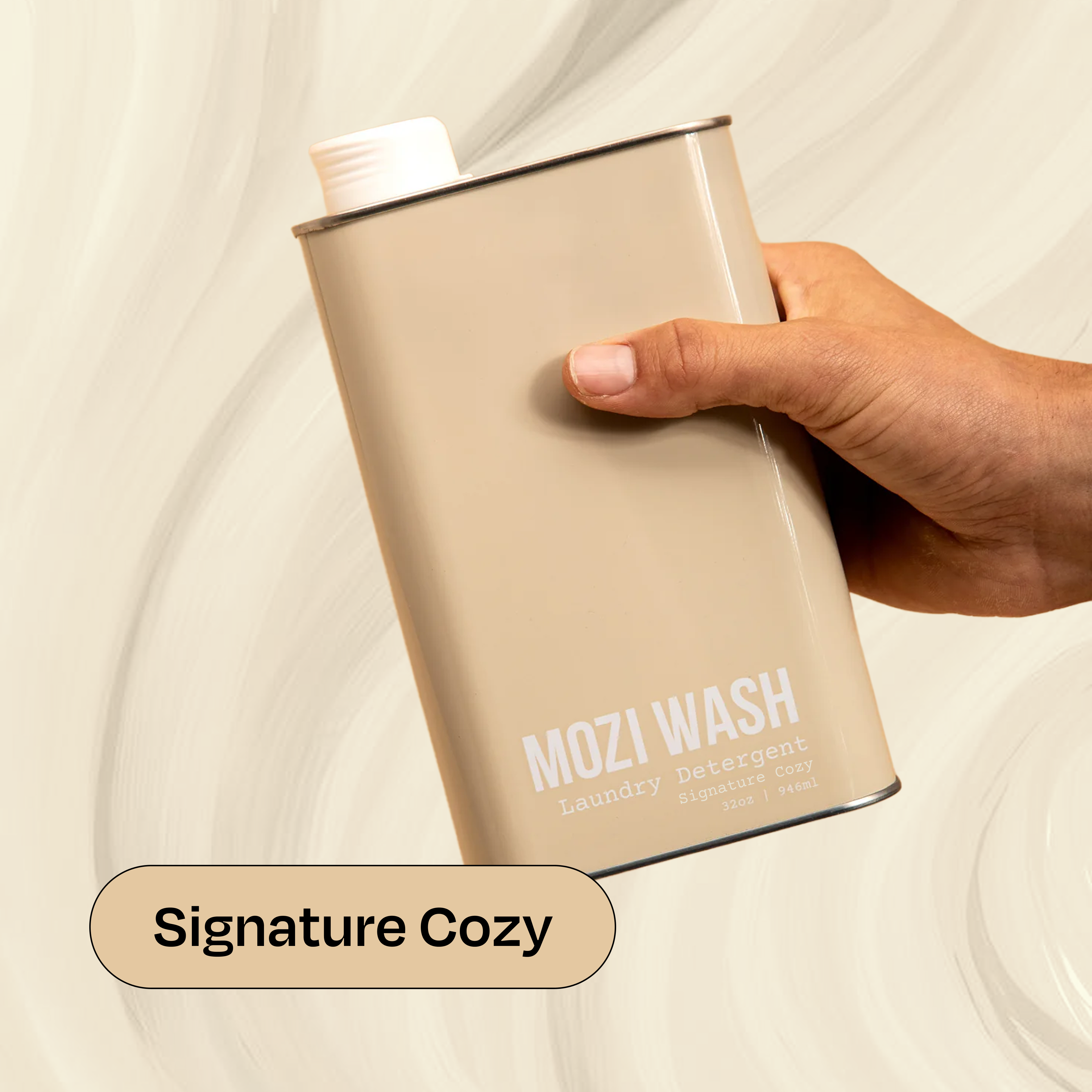
Mozi Wash does the latter. It should be a no-brainer that user health is a priority. Clean formulas, physical comfort, reassuring fragrance. All that is good.
Surfactants: the ingredient that actually cleans

Surfactants are the core cleaning agents in detergents, breaking down oils, dirt, sweat, and stains for water to wash them away.
True, without surfactants, detergent wouldn’t work.
The problem is that many conventional formulas rely on overly harsh surfactants that strip more than just stains.
Over time, they can leave fabrics feeling rough, dry, or weighed down. That favorite cashmere outfit you’re emotionally attached to? Or the linenwear you cannot live without in the summers? They lose longevity.
A thoughtfully made non toxic detergent uses gentler cleaning systems that still perform effectively without overwhelming the fabric.
That difference becomes noticeable over time:
-
clothes feel softer
-
towels remain breathable
-
fabrics don’t develop that stiff, overwashed texture
Good detergent shouldn’t compete with the fabric. It should support it by effectively breaking down the chemical structure of the stains. It is not war. It is diplomacy by efficient ninjas.
Fragrance: why “clean” smells so strong

Fragrance is where things get complicated.
Most people associate a strong scent with cleanliness, so many detergents push fragrance aggressively. It is like putting paid on dirty laundry. A mark of satisfaction – job done.
But “fragrance” on a label can represent dozens – potentially hundreds – of undisclosed chemical compounds.
Some of these are harmless. Others are less ideal, especially for people with sensitive skin or fragrance sensitivities. Still others might be downright outrageous. What are they even doing in your daily-use stuff!
Phthalates come in the last category, used for making scents last longer. But they come with hormone disruption concerns.
That doesn’t mean fragrance itself is bad. It means formulation matters.
Mozi does not cloud a room with fragrance; rather the scent stays close to the fabric – balanced and layered so that it feels intentional.
The result feels more like wearing something clean than wearing luxury perfume disguised as detergent.
Optical brighteners: why some clothes look “too clean”
Ever noticed certain clothes almost glowing after washing?
That’s often the work of optical brighteners. Chances are that you might be fond of them because they seem to “preserve” the color of your favorite dresses.
The reality is far from it. These chemicals coat the fabric with compounds that reflect blue light, creating the illusion of extra whiteness.
The issue is that they stay behind on fabric. So it is not just the outfit that is at risk.
For some people, that residue can feel irritating or unnecessary, especially on clothing worn close to the skin.
A non toxic detergent avoids relying on these additives, choosing actual cleaning performance over cosmetic enhancement.
Dyes: mostly there for the bottle, not the wash
Bright blue detergent looks convincing. It feels “powerful.”
But dyes rarely improve cleaning performance. In most cases, they exist purely for visual branding.
For sensitive skin, though, dyes can sometimes become another unnecessary irritant sitting on fabric after washing.
That’s why many people now prefer detergents with simpler ingredient profiles. A one-stop solution for cleaning towels, bedding, baby clothing, and everyday basics.
Mozi’s enzyme-powered Deep Clean Booster offers this alternative. Families love it!
Preservatives: necessary, but worth understanding
Detergent contains water, and products containing water need preservatives to remain stable over time.
The issue isn’t preservation itself — it’s the type of preservative used.
Certain preservatives, like parabens, have become controversial because of their association with endocrine disruption concerns. This is one reason consumers increasingly seek phthalate free laundry and paraben-free formulas together.
The goal isn’t perfection. It’s reduction of unnecessary exposure where possible.
What Mozi Wash leaves out — and why that matters
Mozi’s approach to laundry begins with a simple belief: detergent should support your life, not complicate it.
That means removing ingredients that often do more for marketing than for the fabric itself. Mozi formulas avoid:
-
phthalates
-
parabens
-
dyes
-
harsh irritants
-
unnecessary residue-heavy additives
The result is a non toxic detergent that feels cleaner in the long run – not because it overwhelms the senses, but because it respects the fabric, the skin, and the routine surrounding it.
Even the fragrances are approached differently. Instead of sharp, synthetic intensity, Mozi scents are designed to settle into fabric naturally, creating presence without heaviness.
Because when it comes to laundry detergent ingredients, what stays out can matter just as much as what goes in.
Laundry detergent ingredients FAQ
-
What are the most important laundry detergent ingredients to avoid?
Phthalates, parabens, heavy dyes, and overly harsh surfactants are no-go zones when looking for safer laundry care options.
-
Try Mozi Wash — cleaner, fresher, smarter.Shop Now
What does non toxic detergent mean?
A non toxic detergent focuses on effective cleaning, avoiding unnecessary additives and common irritants.
-
Why do people look for phthalate free laundry products?
Many consumers prefer phthalate-free laundry formulas for hormone disruption concerns. For families, these can have long-term effects on reproductive health and wellness.
-
Do cleaner detergents still clean effectively?
Yes. Modern non-toxic detergent formulas are designed to remove stains and odors without relying on aggressive ingredients.
-
Why do some detergents leave clothes feeling stiff or heavy?
That often happens because of residue buildup caused by overly harsh cleaning agents, dyes, or fragrance-heavy formulas.