Imagine opening your closet and noticing that your clothes still carry a soft, fresh scent days after they were washed. The fabric feels smooth, the fragrance is subtle, and the garment looks just as good as it did when it was new.
Experiences like this often come down to the detergent being used.
While most laundry products focus primarily on stain removal, another category has quietly gained attention: fine laundry detergent. These formulas are designed not only to clean fabrics but also to care for them. They balance cleaning performance with fragrance quality and fabric preservation.
For households that value the feel of their linens and the scent of freshly washed clothing, choosing the right laundry detergent can make a noticeable difference in everyday laundry.
What is fine laundry detergent?
The term fine laundry detergent generally refers to detergents formulated for delicate fabrics and premium laundry care.
Unlike conventional detergents that prioritize aggressive stain removal, fine detergents are designed with balanced cleaning systems that protect fabric fibers while still removing everyday dirt.
They are commonly used for:
-
Fine linens
-
Silk garments
-
Delicate fabrics
-
Luxury bedding and towels
-
Everyday clothing that benefits from gentle care
People searching for the best laundry detergent for fine linens often prefer formulas that maintain fabric softness while leaving behind a pleasant scent.
In many ways, fine detergents sit within the broader category of luxury laundry products, where fabric care, fragrance quality, and thoughtful formulation take priority over aggressive cleaning power.
What characteristics define a fine laundry detergent
Although different brands interpret the category in their own way, several characteristics consistently define fine laundry detergent.
ph-balanced formulas
One of the key features of fine detergents is a pH-balanced formula.
Traditional detergents are often more alkaline, which can help break down tough stains but may also weaken delicate fibers over time. Fine detergents are formulated to clean fabrics gently while maintaining their structure.
This balanced approach makes them particularly suitable for delicate fabrics and premium linens.
Fragrance-grade ingredients
Fragrance plays an important role in defining the best luxury laundry detergent.
In many mass-market detergents, fragrance is simply added to mask the chemical smell of the formula. The scent often fades quickly once the clothes are dry.
Fine detergents approach fragrance differently. They frequently use fragrance-grade ingredients inspired by perfume compositions, creating scents that linger softly on fabrics without feeling overpowering.
No optical brighteners
Many supermarket detergents contain optical brighteners. These chemicals create the illusion of brighter fabrics by reflecting light.
While they may make clothes appear cleaner, optical brighteners do not actually remove dirt. Over time, they can build up on fabrics and alter their natural texture.
Fine detergents often avoid optical brighteners, focusing instead on true cleaning performance without artificial brightening agents.
Fragrance longevity
Another defining quality of fine laundry detergent is fragrance longevity.
Rather than producing an intense scent that fades quickly, fine detergents are designed to leave a soft fragrance that lasts longer on fabrics.
This makes them especially appealing for people who want their clothes, bedding, and linens to maintain a fresh scent throughout the day.
How fine detergents differ from supermarket detergents
Understanding the difference between fine detergents and typical supermarket products helps clarify why the category exists.
|
Feature |
Fine Laundry Detergent |
Standard Supermarket Detergent |
|
Formula balance |
pH-balanced and fabric-friendly |
Often more alkaline |
|
Fragrance quality |
Perfume-grade scent blends |
Basic fragrance additives |
|
Brightening agents |
Usually free from optical brighteners |
Often contains optical brighteners |
|
Fabric care focus |
Designed to preserve fibers |
Focus on strong stain removal |
|
Fragrance longevity |
Subtle, longer-lasting scent |
Scent fades quickly |
Fine detergents emphasize fabric care and fragrance longevity, while conventional detergents prioritize strong cleaning action.
Where Mozi Wash fits into the fine detergent category
Laundry used to be viewed as a purely functional chore. Today, however, many people expect more from the process.
The feel of freshly washed linens, the scent of clean clothing, and the overall experience of laundry have become part of daily living. This shift has helped define the fine wash laundry category.
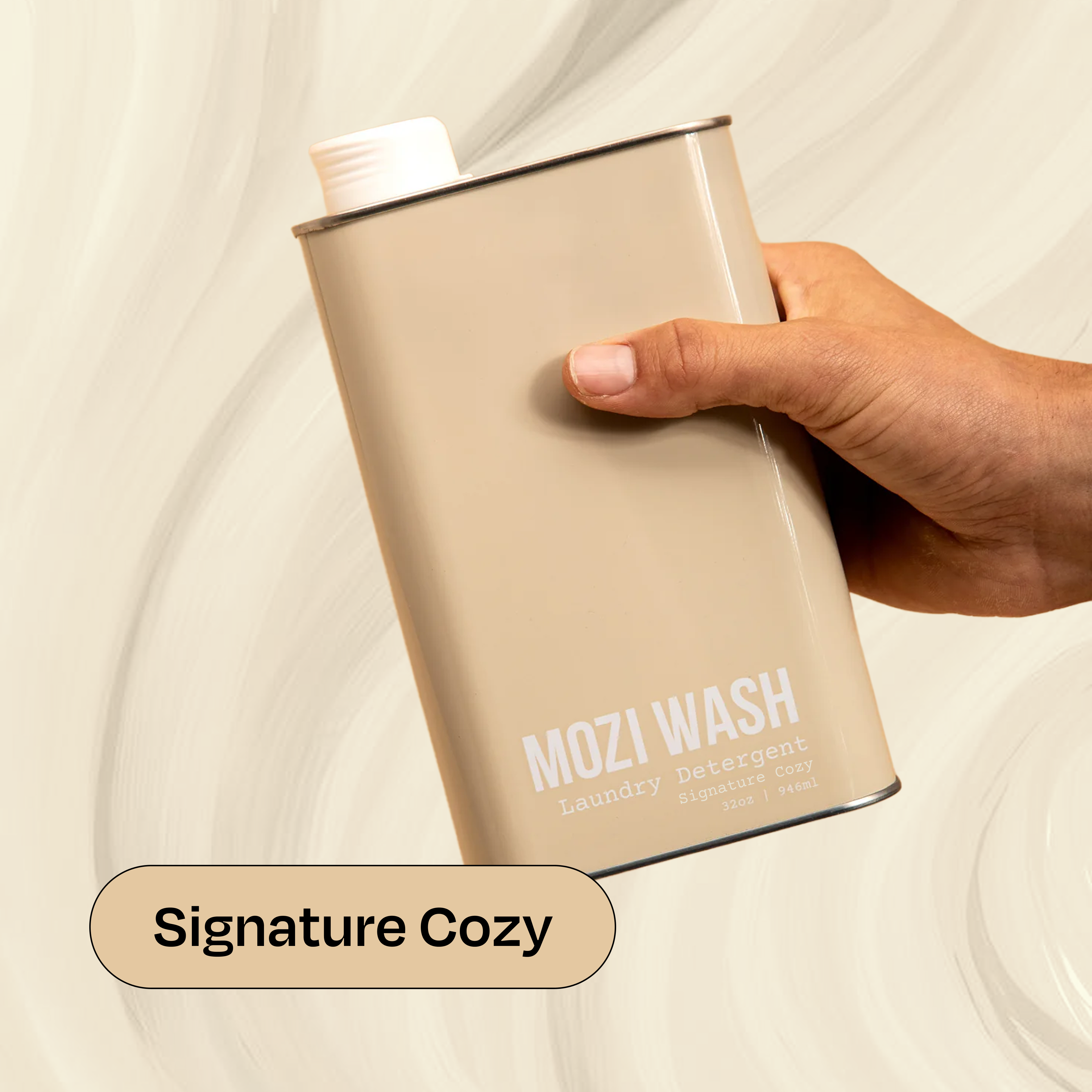
Within the growing fine laundry detergent category, brands like Mozi Wash position themselves as accessible options for people who want a refined laundry experience without moving fully into niche designer detergents.
Mozi Wash focuses on combining effective cleaning with fragrance-driven design.
Some aspects that define the Mozi Wash approach include:
-
Plant-derived surfactants that help lift everyday dirt
-
Enzyme blends that break down common stains
-
Balanced formulas that rinse cleanly without residue
-
Fragrance-inspired detergent blends designed to leave fabrics smelling fresh
-
Recyclable metal packaging that reduces plastic waste
The brand also offers fragrance profiles such as:
These scents are designed to linger softly on fabrics after washing, placing Mozi Wash among the emerging generation of luxury laundry products that combine fabric care with fragrance design.
FAQs about Fine Laundry Detergent
1. Can fine laundry detergent be used in both machine and hand washing?
Yes. Most fine detergents are formulated to work in both washing machines and hand washing. However, always check the product instructions for recommended dosage and washing methods.
2. Is fine laundry detergent suitable for high-efficiency (HE) washing machines?
Many fine detergents are compatible with HE machines because they are formulated to produce low suds. This helps maintain proper machine performance and efficient rinsing.
3. Does water temperature affect how fine detergents perform?
Yes. Fine detergents often work well in cooler water because their formulas are designed to clean gently without relying on high temperatures.
4. Can fine laundry detergent help protect fabric colors?
Yes. As these detergents avoid harsh chemicals and optical brighteners, they often help fabrics maintain their natural color and prevent fading over time.
5. Are fine detergents safe for sensitive skin?
Many fine detergents are designed with balanced formulas that are gentler on fabrics and skin. However, people with sensitivities should still review ingredient lists carefully.
6. How much fine laundry detergent should be used per wash?
Fine detergents are usually concentrated, so a small amount is often sufficient. Using the recommended quantity helps prevent residue and improves rinsing performance.
7. Do fine detergents require fabric softener?
In many cases, fabric softener is not necessary because fine detergents are designed to maintain fabric softness while cleaning.