For years, laundry pods have been sold as a cleaner - a more convenient way to do laundry. Recently, though, they’ve found themselves at the centre of a growing debate over one ingredient: PVA, or polyvinyl alcohol.
Some experts say detergent-grade PVA in laundry pods is biodegradable and safe. Others argue there's still more to learn about what happens after it goes down the drain.
If you’re also wondering about the safety of Polyvinyl Alcohol in laundry pods, read this guide to understand better.
What Is PVA in laundry pods?

PVA, short for Polyvinyl Alcohol (also called PVOH), is a water-soluble synthetic polymer used to create a thin film that holds concentrated laundry detergent together.
When you place a PVA laundry pod into the washing machine, the film dissolves, releasing the detergent inside.
Manufacturers use PVA because it's:
-
Water soluble
-
Strong enough to hold liquid detergent
-
Easy to package into single-dose pods
-
Compatible with many cleaning formulations
Unlike traditional plastic packaging, PVA in laundry pods isn't designed to remain intact after use. Instead, it's intended to dissolve completely during the wash cycle before entering wastewater treatment systems.
Why has PVA become controversial?

PVA in laundry pods wasn’t widely debated even until 5 years ago. So, what changed? Concerns about microplastics raised questions about the safety of Polyvinyl Alcohol laundry pods.
Since then, some environmental groups have questioned whether PVA from laundry pods fully breaks down after it enters wastewater systems. The controversy largely stems from the Plastic Pollution Coalition’s accusations of ‘Greenwashing’ PVA in laundry pods.
The concerns include:
-
PVA is still a plastic, even though it dissolves in water.
-
PVA has been detected in human breast milk, sparking concerns that PVA may accumulate in the human body.
-
Dissolving isn't the same as biodegrading, and they argue there's insufficient independent evidence that detergent-grade PVA consistently biodegrades in real-world wastewater systems.
-
Many studies supporting PVA's safety are industry-funded, prompting calls for more independent research.
In 2022, the Plastic Pollution Coalition and Blueland petitioned the EPA to conduct additional testing and reassess PVA's environmental safety.
So does PVA really dissolve in water?
PVA in laundry pods and other cleaning products is designed to dissolve in water. It has a unique synthetic polymer that’s water soluble. Once the film dissolves, it disperses into individual polymer molecules.
What happens next is where the safety debate begins, with scientists and environmental groups continuing to examine how PVA behaves after entering wastewater systems.
Is PVA biodegradable: What does science say?
In response to the 2022 petition by PPC and Blueland, the U.S. Environmental Protection Agency (EPA) reviewed OECD biodegradability studies, environmental fate research, wastewater treatment data, and more than 30 scientific publications as part of its Safer Choice program.
Based on that review, the EPA concluded that detergent-grade PVA:
-
Is readily biodegradable
-
Dissolves readily in water
-
Is effectively removed during secondary biological wastewater treatment
-
Does not meet the defining characteristics of microplastics
-
Is not persistent or bioaccumulative
-
Has low environmental toxicity
-
Remains eligible for the EPA's Safer Chemical Ingredients List
In short, EPA’s review found PVA biodegradable.
Are PVA laundry pods safe for the environment?
Coming to the environmental impact of laundry pods, are they safe? Well, this remains a major point of debate between regulatory agencies like the EPA and environmental groups.
What research supports
Current studies, as well as the American Cleaning Institute and EPA data, indicate that detergent-grade PVA:
-
Dissolves completely during washing
-
Is readily biodegradable under appropriate biological treatment conditions
-
Does not behave like traditional microplastics
-
Can be effectively removed in secondary wastewater treatment
Why some people remain concerned
Environmental groups continue calling for additional real-world studies.
Their concerns focus on:
-
Differences between laboratory testing and actual wastewater systems
-
Variations in treatment efficiency around the world
-
Limited long-term environmental monitoring
So, are laundry pods safe for the environment? The answer is we simply need more research on this aspect.
Can PVA in laundry pods affect human health?
If you’re wondering about the safety of Polyvinyl Alcohol in laundry pods, the current research says no (at least, for now). Detergent-grade PVA has been reviewed by the U.S. EPA and FDA and is considered safe for everyday consumer use.
That said, keep these things in mind when using laundry pods with PVA:
-
The detergent - not the PVA - is the biggest safety concern. Laundry pods should always be kept away from children and pets because the concentrated detergent inside the pods can be harmful if swallowed.
-
PVA isn't known to trigger skin allergies. If your clothes leave your skin itchy or irritated, fragrance, surfactants, or other detergent ingredients are much more likely to be the cause.
-
Always use pods as directed. If a pod doesn't fully dissolve, leftover detergent residue on clothing could irritate people with very sensitive skin, especially in cold or short wash cycles.
Switching to PVA-free Mozi Wash
The research on PVA in laundry pods is still growing. While the EPA concluded that detergent-grade PVA is safe and biodegradable, it's impossible to know today what decades of future research might uncover.
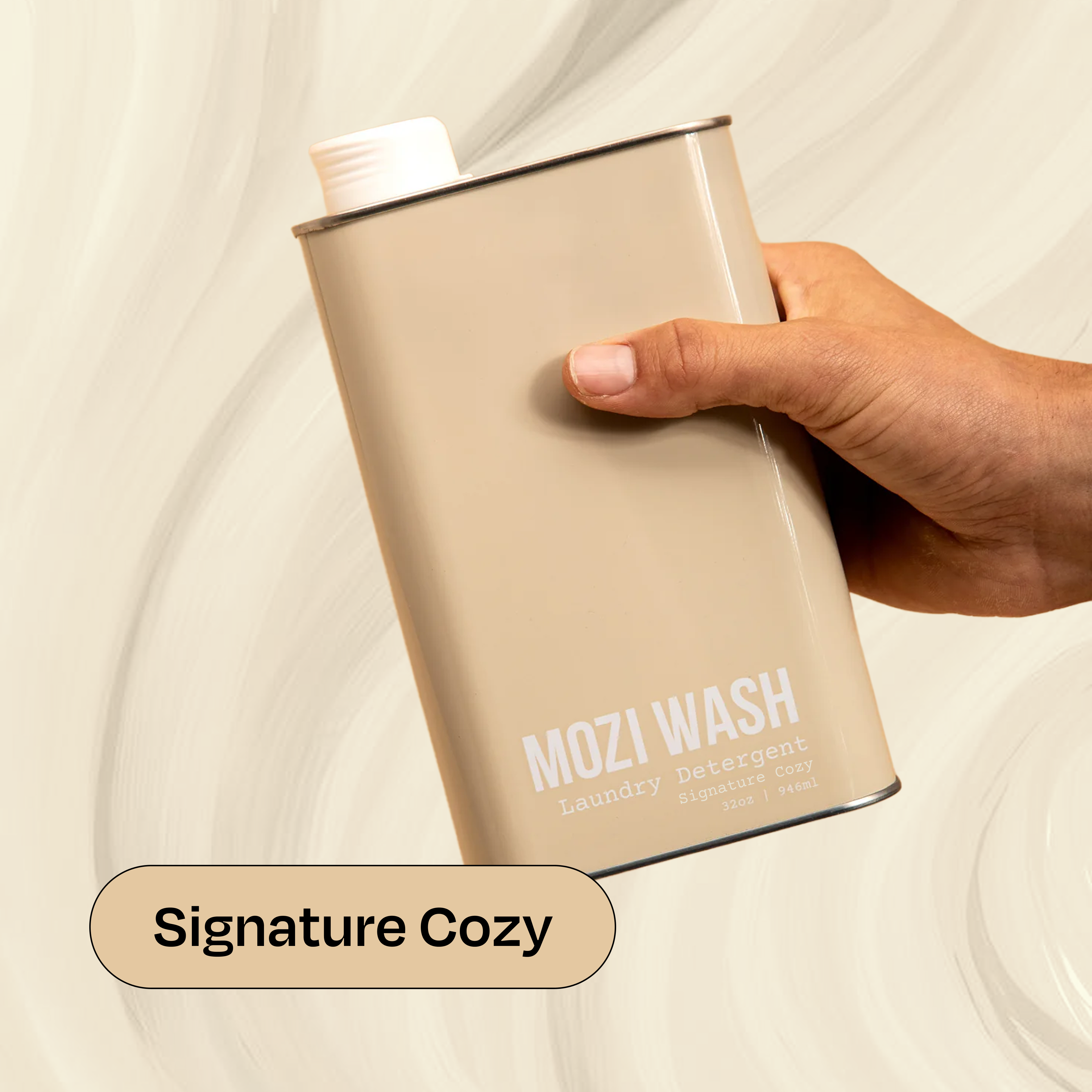
If you'd rather want to play it safe, choosing a PVA-free liquid detergent like Mozi Wash is a great option.
With Mozi Wash, you'll get:
-
No PVA or water-soluble plastic
-
Plant-based enzymes that fight everyday stains
-
Coconut-derived cleansers that clean without harsh ingredients
-
No phosphates, parabens, or phthalates
-
A formula that's gentle on clothes, skin, and the planet
The Bottom Line on PVA Laundry Pods
PVA in laundry pods continues to spark debates - even after the EPA has said that detergent-grade PVA dissolves in water, is biodegradable, and is considered safe for everyday use.
The truth about the safety of Polyvinyl Alcohol in laundry pods is that researchers are still learning more, and long-term studies are still needed. If you are on the fence about using PVA laundry pods, it’s best to skip them for a PVA-free detergent like Mozi Wash that gives you one less ingredient to worry about while still delivering a powerful clean.
FAQs
1. Is PVA bad for the environment?
Currently, research suggests that detergent-grade PVA (used in laundry pods) is biodegradable and has low environmental toxicity. However, some environmental groups argue that longer, independent studies are needed.
2. Can PVA accumulate in the human body?
Some studies showed PVA in human breast milk along with other microplastics. However, extensive studies only on PVA are missing. EPA still holds that it does not bioaccumulate.
3. Is PVA a type of microplastic?
Not really. Most regulatory bodies like the EPA don’t classify PVA as a microplastic because PVA dissolves into individual molecules rather than persisting as solid particles.
4. Can waste water treatment plants biodegrade PVA in laundry pods?
Yes. The EPA has concluded that detergent-grade PVA is effectively removed during secondary biological wastewater treatment.
5. Does PVA dissolve in water?
Yes. PVA is designed to dissolve completely in water, which is why it's used to make laundry pod films and dishwasher tablet coatings.