Linen is one of those fabrics that becomes more personal over time. Especially, they are these easygoing fabrics that you cannot do without in the summer months. Low heat retention, high moisture-wicking abilities – it is a must-have to deal with the summer sweat.
But the challenges of washing and preserving the look and feel of the linen are many. It reacts quickly to harsh washing habits. Water temperature, detergent strength, drying methods, and even ironing techniques all shape how the fabric ages.
That’s why learning how to wash linen properly matters.
Good linen care isn’t about making the fabric look perfect. It’s about helping it remain breathable, relaxed, and comfortable through repeated use.
Why linen needs different care

Linen fibers are naturally strong, but they don’t respond well to aggressive treatment. Especially if it faces agitation in the washing machine, piled up with other heavy clothing.
High heat of the water, harsh detergents, and rough cycles can:
-
dry the fibers out
-
stiffen the texture
-
weaken the weave over time
-
fade color more quickly
All this makes sense when you understand linen as the delicate flax-based product. A combed flax-stalk-based yarn that is reeled and dried afterwards, linen is not naturally stretchable, making it durable but structurally delicate.
In other words, rough handling can warrant a fair bit of shrinking and loss of shape.
Thus, the goal when washing linen clothes is to clean thoroughly without disrupting the natural structure of the fabric.
Linen is supposed to feel airy, textured, and slightly effortless. The wrong routine slowly removes that character.
Start with the right detergent
Your detergent matters more than most people think.
A strong formula might clean aggressively in the short term, but over time it can make linen feel rough or heavy.
A good linen laundry detergent should:
-
rinse cleanly
-
avoid heavy residue
-
preserve breathability
-
clean without stripping the fabric
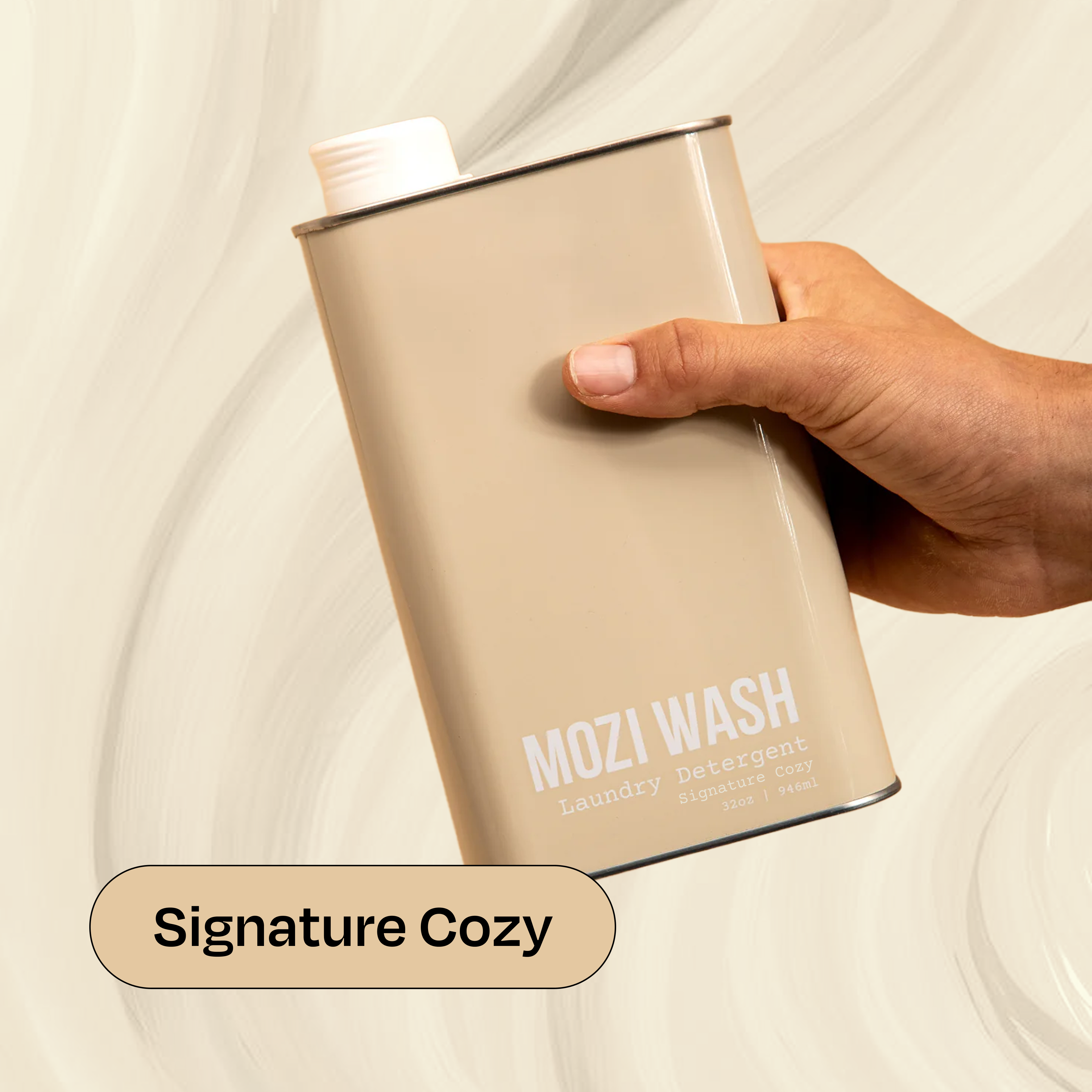
This is where gentler formulas make a noticeable difference, especially for linen sheets and lighter garments worn close to the skin. Mozi’s mild, plant-enzyme-based detergents are best suited for linen as you get your clothes washed without destroying the fabric.
Use cool or lukewarm water
The safest temperature for washing linen clothes is usually cool to lukewarm water.
Hot water can tighten and stress the fibers unnecessarily, especially with dyed or softer linen blends.
As a general rule:
-
Cool water preserves softness and color
-
Lukewarm water works better for heavier dirt or oils
-
Very hot water should be best avoided whenever possible
Linen relaxes naturally over time. Heat doesn’t improve that process — it usually accelerates wear instead.
Choose a gentle cycle
Linen doesn’t need aggressive spinning or heavy agitation.
A gentle or delicate cycle helps maintain:
-
the weave structure
-
softness
-
drape
-
longevity
Overwashing or rough washing tends to flatten the natural texture that makes linen feel distinctive in the first place.
If you’re washing especially delicate linen items, reducing the spin speed helps even further.
Avoid overloading the machine
Linen absorbs a surprising amount of water, which makes garments heavier during the wash cycle.
Overloading creates friction:
-
fabric rubs harder against itself
-
wrinkles deepen
-
fibers wear unevenly
Providing linen space inside the machine helps preserve both structure and softness.
Drying linen the right way
Drying changes linen dramatically, and the longevity of the linen depends on how well you handle this process over time.
The best approach is usually:
-
air drying partially
-
low heat if tumble drying
-
removing while slightly damp
Overdrying is where linen often becomes brittle or excessively wrinkled.
If possible, let linen settle naturally rather than forcing it completely dry with heat.
Why slightly damp linen irons better

Linen wrinkles easily because the fibers are less elastic than cotton; being made from flax strands rather than the bolls that the latter originates in.
But if you prefer a cleaner finish, ironing works best while linen is still slightly damp.
A medium heat setting is usually enough.
For darker or dyed linen:
-
iron inside out to minimize risks of discoloration/accidental polishing
-
avoid extremely high heat to avoid damaging the fabric’s structural integrity
-
move slowly across seams and folds - do not match the stubbornness of the creases with aggressive ironing
These best practices ensure the perfectly crisp linen with the relaxed feel it is valued for.
How often should you wash linen?
Linen breathes naturally due to its fiber structure and releases moisture efficiently, making it unnecessary to wash often. Even if you sweat profusely, its moisture-wicking properties release moisture fast, keeping clothes fresh for longer periods.
These are the ideal frequencies for washing linen.
For sheets:
-
once every 1–2 weeks is usually enough
For clothing:
-
wash based on wear and climate rather than a strict routine
Part of understanding how to wash linen is also understanding when not to wash it unnecessarily.
Different linen items behave differently

Not all linen responds the same way.
Linen sheets
Need gentler detergents and lower residue to maintain softness over time.
Linen shirts and dresses
Benefits from lower spin speeds to preserve drape and shape.
Heavy linen blends
Can tolerate slightly warmer water but still prefers gentler cycles.
Decorative linen fabrics
Should be washed minimally to preserve texture and structure.
The more you understand the fabric, the easier washing linen clothes becomes.
Common mistakes people make with linen
Let us now take a look at some common mistakes to avoid while washing linen:
-
Using harsh detergent: it strips linen of its softness and leaves it feeling dry.
-
Washing with rough fabrics: denims, zippers, and heavy towels increase friction unnecessarily, causing shape loss
-
Using excessive heat: it weakens fibers over time.
-
Overdrying: it makes linen feel stiff rather than relaxed.
-
Overwashing: it is unnecessary, as linen improves gradually with proper wear and care.
Building a better linen routine
Linen responds well to consistency. Here is a how to wash linen guide that you could use as a checklist
-
Separate linen from rough fabrics like denim or towels
-
Use cool or lukewarm water with a gentle linen laundry detergent
-
Wash on a delicate or gentle cycle
-
Avoid overloading the washing machine
-
Dry on low heat or air-dry partially
-
Remove while slightly damp for easier ironing
-
Iron on medium heat if desired
A gentler linen laundry detergent, cooler water, slower drying, and lighter handling all compound over time. The fabric softens naturally, develops texture beautifully, and begins to feel more personal the longer you live with it.
That’s the real appeal of linen: it ages with you rather than against you.
How to wash linen FAQ
-
What is the best water temperature for washing linen clothes?
Cool to lukewarm is the best water temperature for washing linen. Water above 86 degrees Fahrenheit is best avoided. This threshold temperature is the safest for preserving the softness and structure of the fabric while dealing with stains.
-
What is the best linen laundry detergent?
A linen laundry detergent should clean effectively while preserving breathability and softness. No heavy residue. Skin-safe for your laundry ritual.
-
Should linen be tumble-dried?
Yes, but ideally on low heat and removed while slightly damp. The heat sensitivity of the fabric has to be constantly taken care of.
-
Why does linen wrinkle so easily?
Linen fibers are naturally less elastic than cotton, which gives the fabric its relaxed texture.
-
How often should linen sheets be washed?
Usually every 1–2 weeks, depending on use and climate.
-
Can I iron linen clothing?
Yes. Linen irons best while slightly damp using medium heat.